
Backyard Project 3D Rendering Benefits Explained
Discover backyard project 3D rendering benefits. Visualize your outdoor renovation with precise details for fewer surprises and better results.
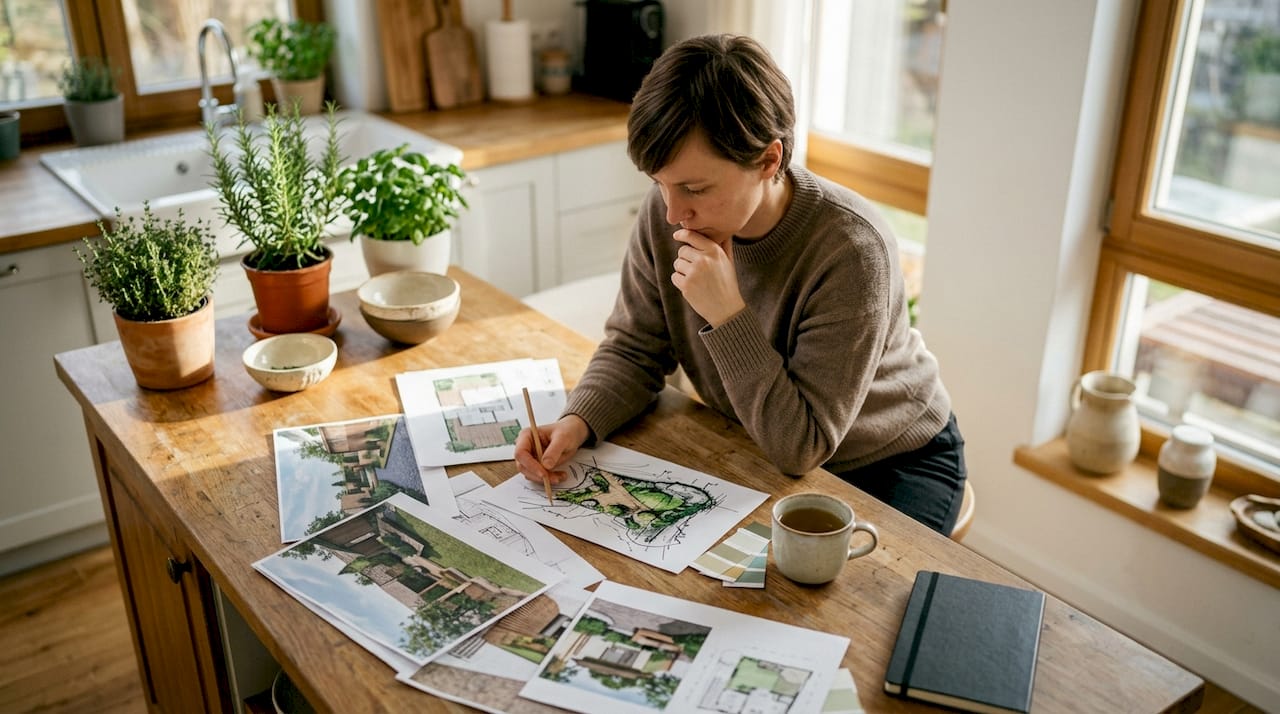
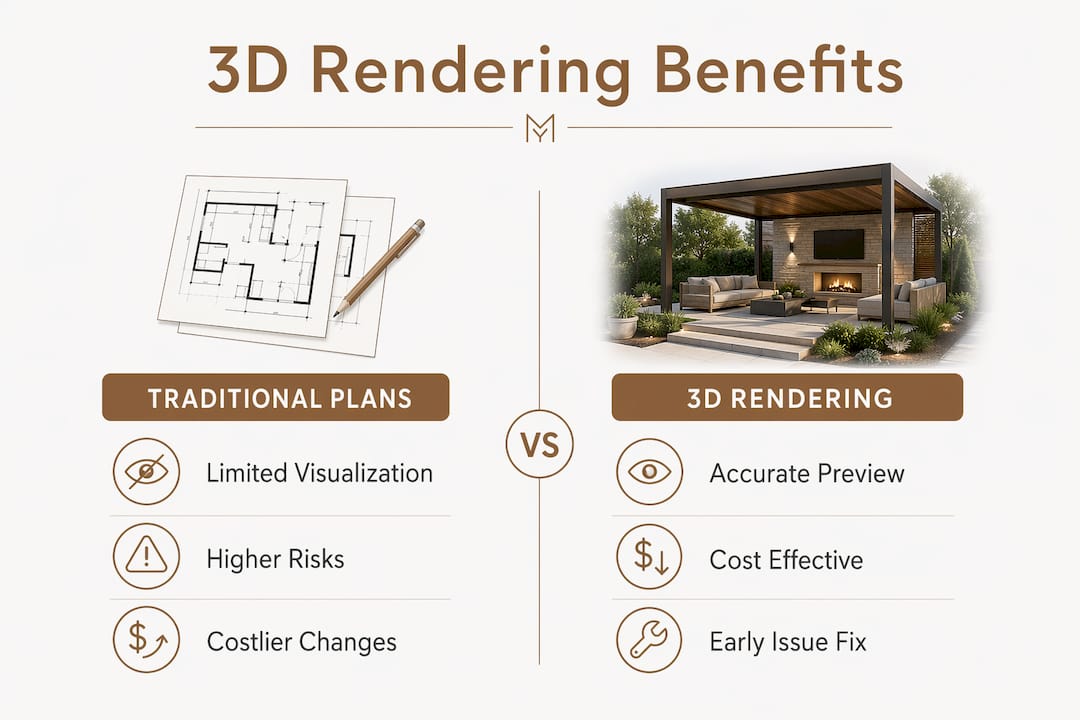
Photo-realistic 3D rendering is the industry-standard visualization method that shows homeowners an exact digital preview of their backyard renovation before a single shovel breaks ground. For any backyard project, 3D rendering benefits begin long before construction: you see true scale, real materials, and accurate lighting conditions rendered against your actual property. The result is fewer surprises, fewer change orders, and a finished space that matches what you approved. Modern Yardz builds every luxury outdoor environment in San Diego from a client-approved 3D rendering, and the difference in project outcomes is measurable.
What are the core backyard project 3D rendering benefits?
3D landscape rendering, also called photo-realistic landscape visualization, produces a digital model of your proposed outdoor space using your property's actual dimensions, topography, and architecture. The model shows pavers, plantings, water features, pergolas, and lighting in context, not as abstract symbols on a flat plan. This is the critical distinction between 2D architectural drawings and full 3D modeling for backyard design.
The advantages of 3D landscape plans over traditional blueprints fall into four categories: visualization accuracy, cost control, material confidence, and communication clarity. Each one directly affects how smoothly your project runs and how closely the finished yard matches your expectations. Understanding all four before you commit to a contractor is the most protective thing you can do for your investment.
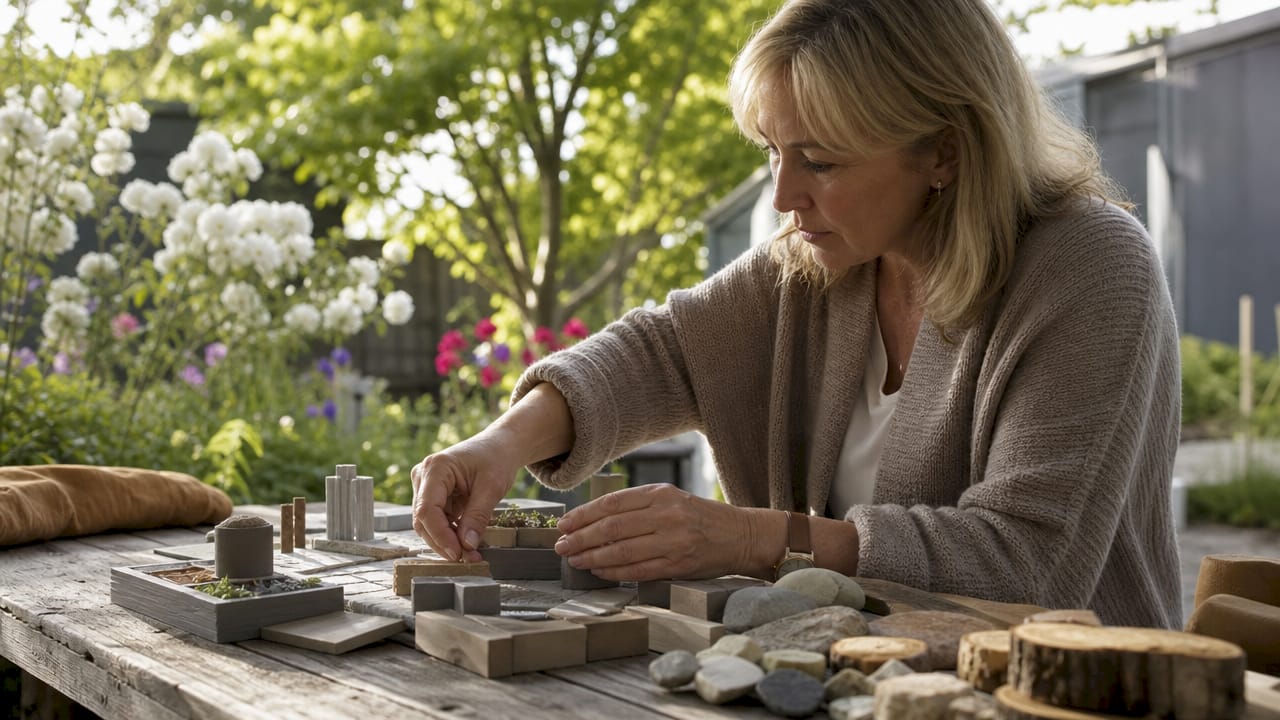
How does 3D rendering improve visualization and design accuracy?
The most common backyard design failures stem from misjudged scale, and 3D visualization reveals those errors clearly before any concrete is poured. A patio that looks generous on a 2D plan can feel cramped once it is surrounded by a pergola, an outdoor kitchen, and seating walls. A pool that appears centered on paper may sit awkwardly close to a property boundary in reality.
Photo-realistic 3D models correct these problems at the design stage, where corrections cost nothing beyond a few hours of revision time. Specific issues that 3D rendering catches before construction include:
- Patios placed too close to setback boundaries, which would require permits or redesigns mid-build
- Features that block sightlines, such as a fire pit wall that eliminates a canyon or ocean view
- Circulation paths that are too narrow for comfortable foot traffic between zones
- Pool placement that conflicts with underground utilities or drainage flow
3D renderings also simulate natural light and shadows at different times of day, so you can see whether your covered patio will be in full shade by 4 p.m. or whether your pool deck will be in direct sun during peak afternoon hours. That level of environmental accuracy changes material choices, shade structure placement, and seating orientation in ways a 2D plan simply cannot predict.
Pro Tip: Ask your designer to render the space at both midday and late afternoon. The difference in shadow coverage often reveals whether you need a louvered pergola, a solid patio cover, or no cover at all.
How does early 3D planning reduce costly changes and delays?
Making design changes during construction costs 5 to 10 times more than resolving the same issue during the planning phase. That multiplier exists because mid-build changes require stopping crews, reordering materials, revising permits, and sometimes demolishing completed work. A drainage slope correction that takes two hours to fix in a 3D model can take two weeks and tens of thousands of dollars to fix after concrete is poured.
The optimal time to commission 3D design is before permits are submitted and before any construction begins. Planning during winter or early spring gives you time to refine the rendering, secure permits, and schedule crews without compressing the build timeline. Homeowners who start the 3D process after permits are already filed lose the flexibility to make meaningful design changes without triggering permit amendments.
Site-specific technical issues are the most expensive problems that 3D rendering identifies early. These include improper drainage slopes that would cause water to pool against the house, feature placements that conflict with zoning setbacks, and grade changes that require retaining walls not originally scoped. Catching any one of these in a rendering rather than during construction can save the equivalent of the entire rendering fee many times over.
Pro Tip: Before your first design meeting, photograph your yard at different times of day and note where water pools after rain. Share those photos with your designer. That information feeds directly into the 3D model and prevents drainage errors before they start.
How does 3D rendering support better material selection?
3D rendering lets homeowners compare material options side by side in the context of their actual property, preventing expensive mistakes with non-returnable premium items. Travertine pavers, natural stone coping, and porcelain tile are not interchangeable after they are cut and delivered. Choosing the wrong finish at that stage means absorbing the full cost of the error.
The table below shows how 3D rendering changes the material selection process compared to selecting from samples alone.
| Selection method | What you see | Risk level |
|---|---|---|
| Physical samples only | Color and texture in isolation | High: colors shift in context |
| 2D plan with material notes | Labels, no visual context | High: scale and proportion unknown |
| 3D rendering with materials applied | Full context, lighting, and scale | Low: decisions made with complete information |
Beyond preventing ordering errors, 3D modeling for backyard design also shows how selected materials interact with your home's existing architecture. A warm-toned travertine that looks neutral in a showroom can clash with a cool-gray stucco exterior when rendered together. A dark basalt fire bowl that reads as elegant in isolation can disappear visually against a dark paver field. The rendering surfaces these conflicts before purchase.
Additional material decisions that 3D visualization improves:
- Choosing between open lattice and solid-roof pergola structures based on actual shadow patterns
- Selecting plant species and placement that complement hardscape colors without overcrowding
- Confirming that pool finish colors read correctly under both natural and LED lighting conditions
Why does 3D rendering improve communication across the project team?
A 3D rendering serves as a universal language that aligns the homeowner, the designer, and the construction crew on a single shared vision. Two-dimensional blueprints require interpretation. Different people reading the same plan often form different mental images of the finished space. That gap between interpretations is where construction drift begins.
Construction drift is the gradual deviation from the original design that happens when crews make small judgment calls without a clear visual reference. Each individual decision may seem minor. Collectively, they produce a finished yard that looks noticeably different from what the homeowner approved. A 3D model eliminates that ambiguity by giving every team member a photorealistic reference they can return to at any point in the build.
The communication benefits of 3D rendering follow a clear sequence:
- Homeowner approval: You sign off on a rendering you can see and understand, not a blueprint you have to interpret.
- Designer alignment: The rendering locks in design intent so revisions happen before construction, not during.
- Crew reference: Field crews use the rendering to verify placement, elevation, and material application at each build stage.
- Change management: Any requested modification is evaluated against the approved rendering, making scope changes explicit and priced before work begins.
3D renderings improve homeowner satisfaction by providing a clear preview that reduces post-build disappointment. When you have approved a rendering and the finished space matches it, there is no room for the "this isn't what I pictured" conversation that drives costly post-construction disputes.
How does a master 3D rendering support phased backyard renovations?
Phased backyard projects require a unified master 3D rendering to maintain design coherence and avoid incompatible investments between phases. A homeowner who builds a pool and patio in year one and adds an outdoor kitchen and pergola in year three needs both phases to read as a single architectural environment. Without a master rendering, the second phase often conflicts with the first in scale, material palette, or traffic flow.
A master rendering created at the outset of a multi-phase project serves several practical functions:
- Locks in the material palette across all phases so travertine selected in phase one matches the coping and countertops planned for phase three
- Reserves space for future features, preventing phase-one construction from blocking phase-two placements
- Guides incremental permit applications so each phase fits within the approved overall plan
- Provides a reference for future contractors if the project spans multiple years or involves different crews
The role of 3D design in backyard planning extends beyond aesthetics. It anticipates logistical and environmental factors, including drainage routing, utility placement, and structural load paths, that must be coordinated across phases. Addressing those factors in a single master rendering at the start costs far less than resolving conflicts between completed and planned phases mid-project.
Key takeaways
3D rendering is the single most effective tool for preventing costly errors, aligning all project stakeholders, and delivering a finished backyard that matches the homeowner's original vision.
| Point | Details |
|---|---|
| Catch scale errors early | 3D visualization reveals misjudged proportions before construction begins, avoiding expensive post-build fixes. |
| Plan before permits | Commission your 3D rendering before submitting permits to preserve full design flexibility. |
| Prevent material mistakes | Side-by-side material comparisons in context eliminate costly errors with non-returnable premium items. |
| Align the full team | A shared 3D model removes interpretation gaps between homeowner, designer, and construction crew. |
| Use a master rendering for phased builds | A single master rendering keeps multi-year projects visually and structurally coherent across all phases. |
What I've learned from watching 3D rendering change luxury builds
I have reviewed hundreds of backyard renovation projects over the years, and the pattern is consistent. Projects that begin with a detailed, photo-realistic rendering finish closer to budget, closer to schedule, and with fewer post-build complaints than projects that skip that step. The rendering is not a sales tool. It is a planning instrument.
The insight that surprises most homeowners is how much the rendering changes their own thinking. You may arrive at the first design meeting certain you want a freeform pool with a beach entry. After seeing a geometric lap pool rendered against your home's clean architectural lines, you often reconsider. The rendering gives you permission to change your mind before the decision is irreversible.
For luxury projects in San Diego, where a full outdoor living environment can represent $150,000 to $300,000 or more in construction value, the rendering phase is where the real design work happens. Construction is execution. Design is decision-making. Every hour spent refining a rendering is worth multiples of that time saved during the build. That is not a theory. It is what the 5-to-10x cost multiplier for mid-construction changes tells you in plain numbers.
The homeowners who get the best outcomes are the ones who treat the rendering review as seriously as they treat the construction contract. They ask questions, request revisions, and do not approve the rendering until every element looks exactly right. That discipline at the design stage is what produces a finished yard that still feels right five years later.
— Thomas Jackson
Modern Yardz: 3D rendering built into every project
Modern Yardz integrates photo-realistic 3D rendering into every project as a standard part of its luxury design-build process, not an optional add-on. From the first consultation through final construction, one team manages every phase: 2D architectural plans, 3D renderings, permitting, material procurement, and full build. No subcontractors. No handoffs. No version of the plan that gets lost between designer and crew.
With 2,900+ completed projects, a 5.0-star Google rating, and California Contractor License #1082881, Modern Yardz brings that depth of experience to every rendering review. You approve the design before construction begins. What you see is what gets built. Schedule a free consultation to see how the process works for your property.
FAQ
What is 3D rendering in a backyard project?
3D rendering is a photo-realistic digital model of your proposed backyard design, built to your property's actual dimensions and showing real materials, lighting, and scale before construction begins.
How much can 3D rendering save on a backyard renovation?
Design changes during construction cost 5 to 10 times more than the same changes made during the planning phase. Resolving issues in a rendering before permits are filed eliminates that cost multiplier entirely.
When should I get a 3D rendering for my backyard?
Commission your 3D rendering before submitting permits and before any construction begins. Planning in winter or early spring gives you the most flexibility to refine the design without delaying your build schedule.
Can 3D rendering help with phased backyard projects?
A master 3D rendering created at the start of a phased project locks in the material palette, reserves space for future features, and keeps all phases visually and structurally coherent across multiple years of construction.
Does 3D rendering replace 2D architectural plans?
No. The two work together. Two-dimensional architectural plans provide the technical documentation required for permits. Three-dimensional renderings provide the visual reference that homeowners, designers, and crews use to align on design intent throughout the build.
Recommended
Start Your Free Design Consultation
Tell us about your project and we'll be in touch within 24 hours. No pressure, no obligation.
Ready to design your dream yard?
Tell us about your project. We'll send back a real plan, not a templated quote.
Book My Free Consultation→

