The Role of 3D Rendering in Outdoor Design
Discover the crucial role of 3D rendering in outdoor design! Enhance communication and visualize your dream spaces before construction starts.
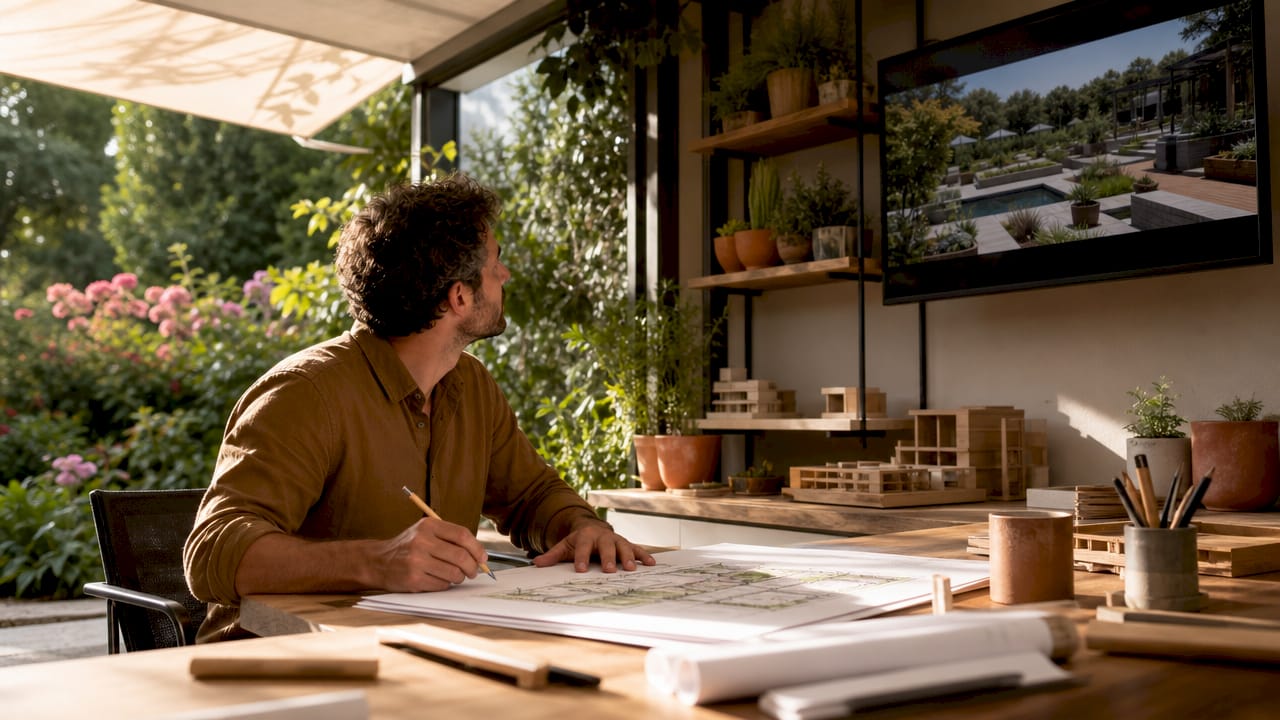
3D rendering in outdoor design is defined as the process of generating photorealistic, spatially accurate digital models of exterior spaces before any physical construction begins. The role of 3D rendering in outdoor design extends far beyond aesthetics. It functions as the primary communication tool between homeowners, designers, and contractors, replacing ambiguous 2D blueprints with immersive visuals that every stakeholder can read, evaluate, and approve with confidence. Modern platforms now integrate AI to produce explorable environments from a single site photo, raising the bar for what clients expect before they sign off on a project.
How 3D rendering improves communication and decision-making
3D visualization in landscape design serves as a universal visual language, and that is its most underappreciated function. A homeowner looking at a flat architectural plan sees lines and measurements. The same homeowner looking at a photorealistic rendering sees their future patio, their pool edge, and the exact travertine color they approved. That shift from abstract to concrete removes the single biggest source of mid-project conflict: misaligned expectations.
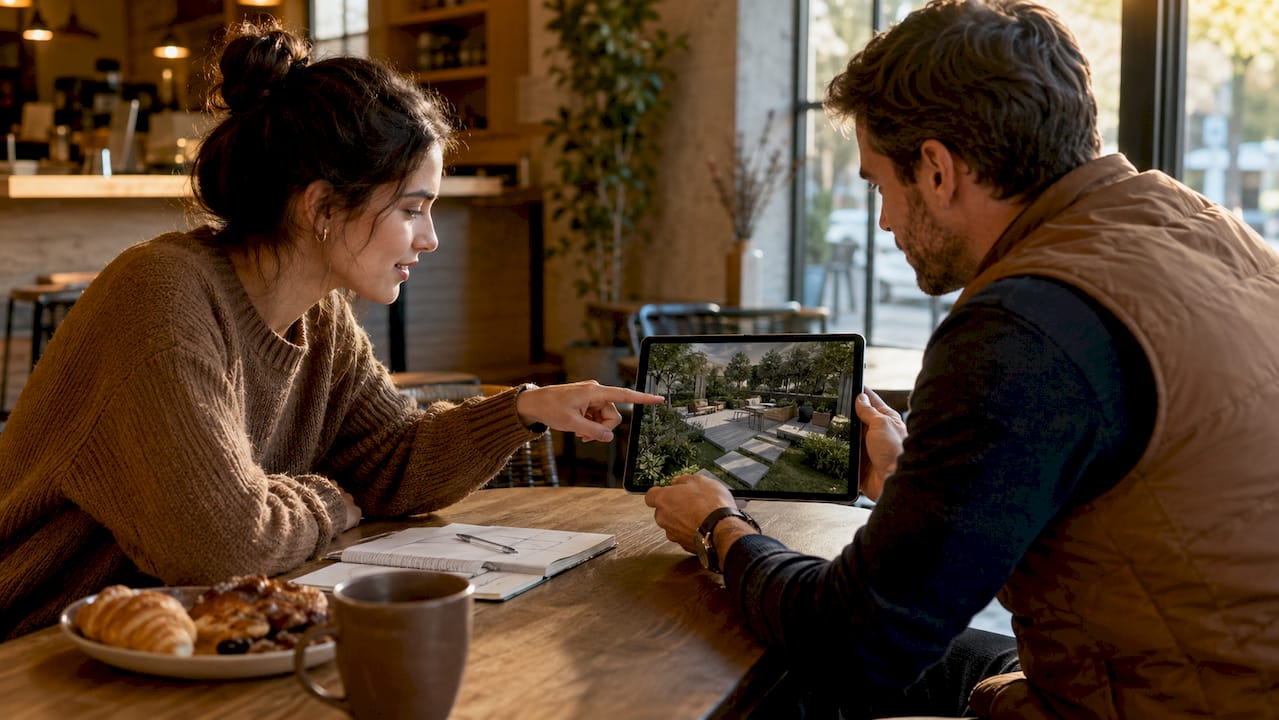
Renderings eliminate technical interpretation of flat 2D plans, which is a requirement in luxury design-build projects where every material decision carries significant cost. When a designer can instantly swap a limestone countertop for a quartzite finish inside the model, the client makes a real decision rather than a guess. That speed of comparison directly accelerates approvals and reduces the back-and-forth that stalls construction timelines.
Design-build firms use renders to compare materials and lighting variations before a single product is ordered. This matters most in outdoor kitchens and pool surrounds, where the interplay between natural stone, water reflection, and evening lighting determines whether a space feels resort-caliber or merely functional. Seeing those combinations in a rendered environment builds client confidence in a way that a material sample board simply cannot replicate.
The benefits of outdoor design rendering in the decision-making phase include:
- Material comparison: Swap travertine, porcelain, or natural stone finishes side by side without ordering samples
- Lighting simulation: Preview how LED pool lighting, landscape uplights, and pergola fixtures interact at dusk
- Sightline verification: Confirm views from interior rooms are preserved or enhanced by the new design
- Scale accuracy: Understand true spatial relationships between a pool, outdoor kitchen, and seating area before construction
Pro Tip: Ask your designer to render the same space under two different lighting conditions, midday sun and evening ambiance. The difference in how materials read under each condition often changes final material selections entirely.
How does 2D planning compare to 3D rendering for outdoor projects?
Traditional 2D blueprints communicate dimensions and layout, but they require significant technical literacy to interpret correctly. Most homeowners cannot accurately visualize depth, shadow, or material texture from a top-down plan. That gap between what the plan shows and what the homeowner imagines is where costly misunderstandings originate.
High-quality 3D models reveal design oversights such as obstructed sightlines or unwanted afternoon shading that are invisible in 2D drawings. A pergola that looks perfectly positioned on a flat plan may block the primary kitchen window when viewed in three dimensions. Catching that conflict in a digital model costs nothing. Catching it after the concrete is poured costs thousands.
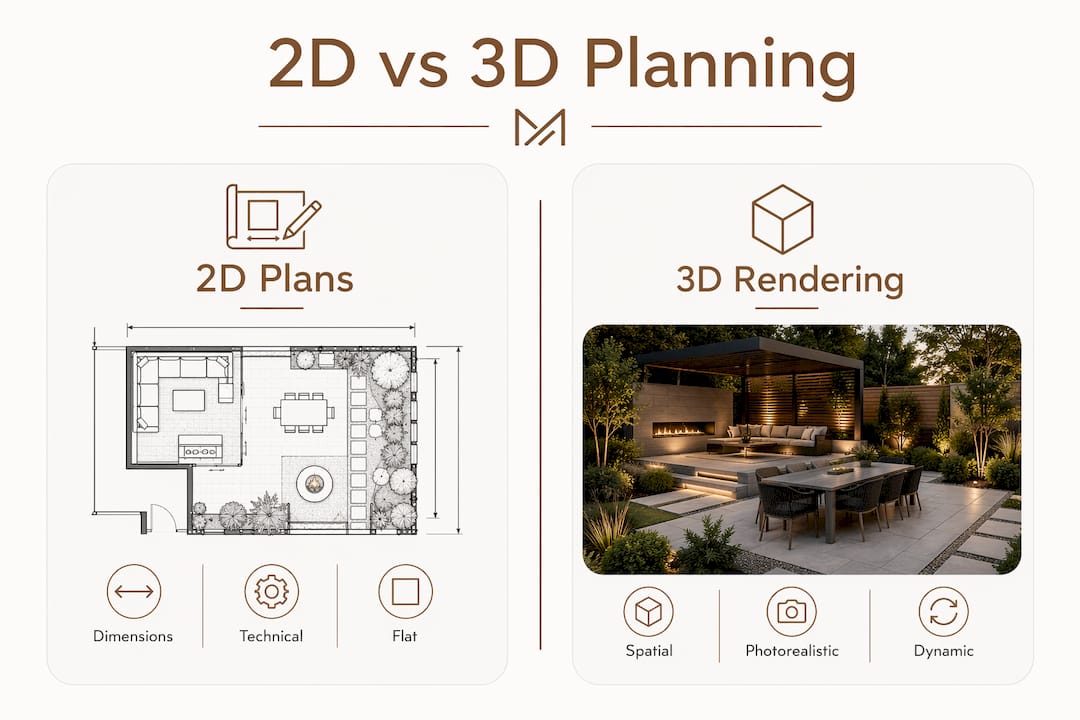
3D models also function as living documents. They update material quantities as design elements change, giving the project team an accurate count of stone, concrete, and soil needed at any point in the design process. That capability directly supports budget accuracy and phased construction planning.
| Feature | 2D Plans | 3D Rendering |
|---|---|---|
| Spatial depth and scale | Not visible | Fully rendered |
| Material appearance | Labeled only | Photorealistic |
| Shadow and lighting | Not shown | Simulated accurately |
| Sightline verification | Not possible | Viewable from any angle |
| Material quantity tracking | Manual calculation | Extracted from model |
| Client approval confidence | Low to moderate | High |
The table above makes the practical gap clear. For a luxury outdoor project where a single material change can shift the budget by $15,000 or more, the precision of 3D modeling is not optional. It is the responsible way to plan.
What technology advances are shaping 3D outdoor design rendering?
The most significant shift in 3D rendering techniques for exteriors over the past two years is the integration of AI into the modeling workflow. AI-powered platforms can transform a site photo into an explorable 3D environment in approximately 60 seconds. That speed changes the design conversation entirely. A designer can arrive at a client meeting with three rendered concepts generated from the homeowner's own backyard photos, rather than generic mood boards.
Beyond speed, modern outdoor design visualization tools now offer:
- Immersive 3D walkthroughs: Clients navigate the rendered space at eye level, experiencing scale and proportion the way they would in the finished environment
- Augmented reality overlays: AR tools project the rendered design onto the actual property through a tablet or phone, placing a virtual pool or pergola in the real yard in real time
- Growth simulation: Software models how trees, hedges, and ground cover will mature over three to five years, showing the canopy coverage and privacy screening the landscape will provide at full maturity
- Lighting cycle simulation: Time-of-day rendering shows how natural light moves across the space from morning through evening, identifying shading patterns before construction
3D software simulates plant growth stages to guide long-term canopy and species selection. This is particularly valuable in San Diego, where drought-tolerant native species often have slower growth rates than ornamental alternatives. Seeing a five-year maturity rendering helps homeowners choose species that deliver the privacy and shade they want within a realistic timeframe.
Pro Tip: When reviewing a 3D walkthrough, pay close attention to the transition zones between hardscape and planting areas. Those edges are where most design refinements happen, and they are far easier to adjust in the model than after installation.
What are the practical benefits of 3D rendering for project planning?
The practical applications of 3D rendering in outdoor project planning go well beyond visual approval. Accurate material takeoffs from 3D renderings allow design teams to generate itemized lists for stone, concrete, and soil quantities, giving homeowners cost transparency before any contracts are signed. That precision is the difference between a budget that holds and one that expands by 20% mid-construction.
Phased construction planning is another direct benefit. A homeowner who wants a full outdoor living environment but prefers to build in stages can use the 3D model to sequence the pool, outdoor kitchen, and paver system across two or three construction phases. Each phase is visualized independently and as part of the completed whole, so the final result remains cohesive even when built over time.
The numbered list below outlines the four most practical applications of 3D rendering in outdoor project execution:
- Material takeoff accuracy: The model generates precise quantities for travertine pavers, coping stone, concrete, and soil, reducing invoice surprises at the material procurement stage
- Phased installation planning: Each construction phase is rendered independently, confirming that partial builds look intentional and complete rather than unfinished
- Growth and maturity visualization: Plant selections are shown at installation day and at five-year maturity, guiding species choices that deliver realistic privacy and shade timelines
- On-site change prevention: Projects using 3D visualization avoid costly on-the-fly changes common to 2D workflows, saving both material costs and labor hours
| Application | Primary Benefit | Who It Protects |
|---|---|---|
| Material takeoffs | Budget accuracy | Homeowner |
| Phased planning | Design cohesion across stages | Homeowner and contractor |
| Growth simulation | Realistic long-term expectations | Homeowner |
| Change prevention | Reduced labor and material waste | Both parties |
Clients who have seen photorealistic 3D models find 2D mood boards inadequate as a basis for project approval. That shift in expectation is now the standard in luxury residential design. Homeowners investing $150,000 or more in an outdoor living environment expect to see exactly what they are buying before construction starts, and 3D rendering is the only tool that delivers that level of certainty.
Key takeaways
3D rendering is the most effective tool for aligning homeowners, designers, and contractors on outdoor projects before construction begins, preventing costly changes and delivering budget accuracy.
| Point | Details |
|---|---|
| Communication clarity | Renderings replace ambiguous 2D plans with photorealistic visuals every stakeholder can evaluate. |
| Cost protection | Accurate material takeoffs from 3D models prevent budget overruns and mid-project surprises. |
| Design oversight prevention | 3D models detect sightline and shading issues that 2D plans cannot reveal. |
| Technology acceleration | AI-integrated tools generate explorable 3D environments from site photos in under 60 seconds. |
| Long-term planning | Growth simulation shows plant maturity at five years, guiding realistic species and privacy decisions. |
Why I think renderings are the most underused tool in outdoor design
I have worked on outdoor projects where the homeowner approved a design from a 2D plan and a verbal description. Those projects almost always produced at least one significant change order, and the change orders were never small. A pergola moved three feet. A pool coping material swapped after the first sample arrived on site. A fire feature relocated because the original position blocked the kitchen view. Every one of those changes was preventable with a proper rendering reviewed before construction.
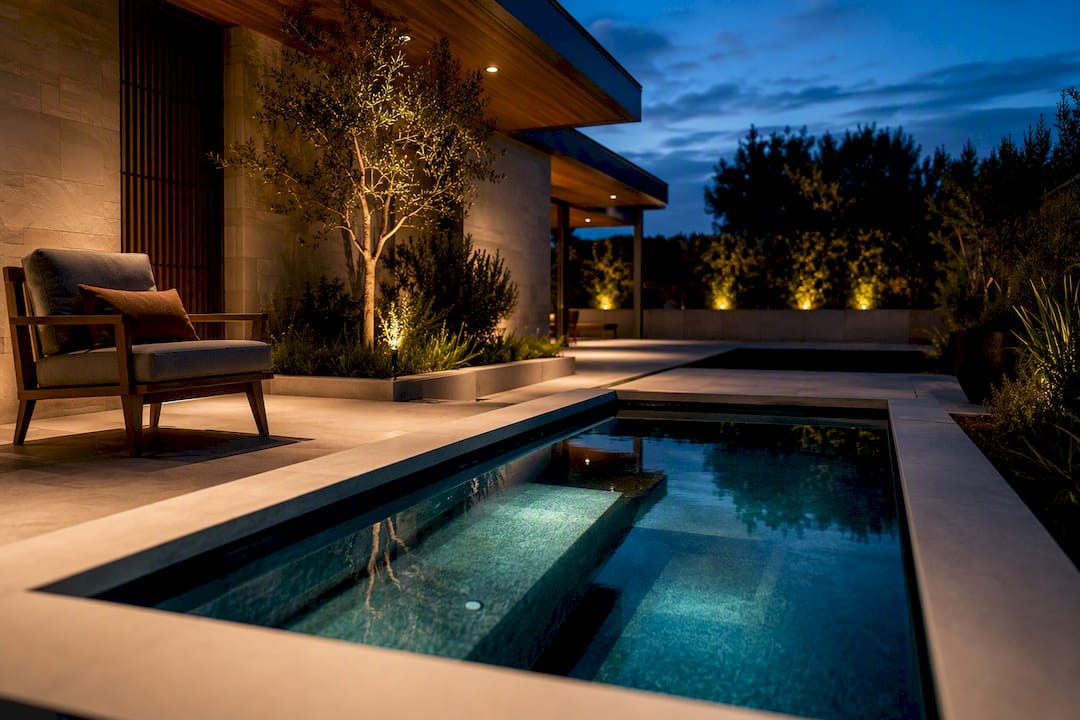
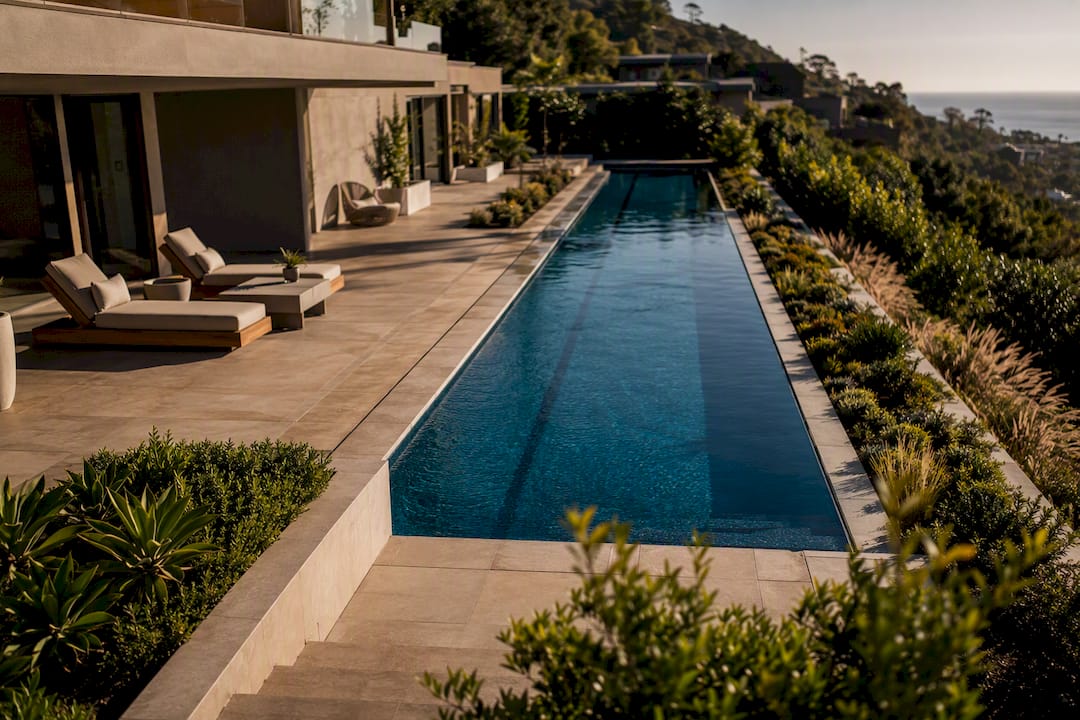
What I find most valuable about 3D rendering is not the visual quality, impressive as it is. It is the way a rendering forces a real decision. When you see your actual backyard rendered with a vanishing-edge pool, a travertine deck, and a louvered pergola overhead, you either love it or you do not. That clarity is worth more than any amount of verbal reassurance from a designer. You can also explore landscape lighting options within the same rendered environment, which changes how most homeowners think about their outdoor space after dark.
My advice to any homeowner planning a significant outdoor project: treat the rendering phase as the most important phase of the entire project. Spend time in the walkthrough. Request material swaps. Ask to see the space at evening lighting. The rendering is not a formality. It is the moment where your investment either gets locked in correctly or starts accumulating expensive corrections. Designers who treat renderings as working documents rather than presentation slides produce better outcomes, and the difference shows in the final build.
— David
See your outdoor space in 3D before construction starts
Modernyardz has delivered over 2,900 luxury outdoor projects across San Diego County, and every single one starts with a photorealistic 3D rendering the homeowner approves before a shovel breaks ground. That process is not a courtesy. It is how we protect your investment and deliver a finished space that matches what you envisioned. From custom pools and travertine paver systems to outdoor kitchens and architectural pergolas, our luxury landscape design-build process covers consultation, 2D plans, 3D rendering, permitting, and full construction under one team with one point of contact. Schedule a consultation to see your property rendered in full detail before any commitment is made.
FAQ
What is the role of 3D rendering in outdoor design?
3D rendering in outdoor design translates design concepts into photorealistic, spatially accurate digital models that homeowners, designers, and contractors can review and approve before construction begins. It functions as the primary decision-making tool for material selection, layout confirmation, and budget accuracy.
How does 3D rendering prevent costly construction mistakes?
Projects using 3D visualization avoid on-the-fly changes common to 2D workflows by locking in design decisions before materials are ordered or ground is broken. Catching a sightline obstruction or material conflict in the model costs nothing compared to correcting it on site.
Can 3D rendering show how plants will look years after installation?
Yes. 3D landscape software simulates plant growth stages, showing how trees, hedges, and ground cover will appear at installation day versus five-year maturity. This guides species selection and helps homeowners set realistic expectations about privacy screening and canopy coverage.
How does AI change the 3D rendering process for outdoor spaces?
AI-integrated platforms can generate a high-fidelity explorable 3D environment from a site photo in approximately 60 seconds, allowing designers to present multiple rendered concepts at the first client meeting rather than returning weeks later with a single option.
Do I need 3D rendering for a smaller outdoor project?
Any project involving permanent hardscape, pools, or structural elements benefits from 3D rendering because material quantities, spatial relationships, and sightlines cannot be accurately evaluated from 2D plans alone. For projects above $25,000, the rendering cost is negligible compared to the cost of a single mid-construction change order.
Recommended
Start Your Free Design Consultation
Tell us about your project and we'll be in touch within 24 hours. No pressure, no obligation.
Ready to design your dream yard?
Tell us about your project. We'll send back a real plan, not a templated quote.
Book My Free Consultation→