Zone 0 Landscaping Requirements in San Diego (2026)
What Zone 0 requires in the first 5 feet around your home, whether the rule applies to your San Diego property, where the statewide regulation actually stands in 2026, and what Rancho Santa Fe already enforces today.
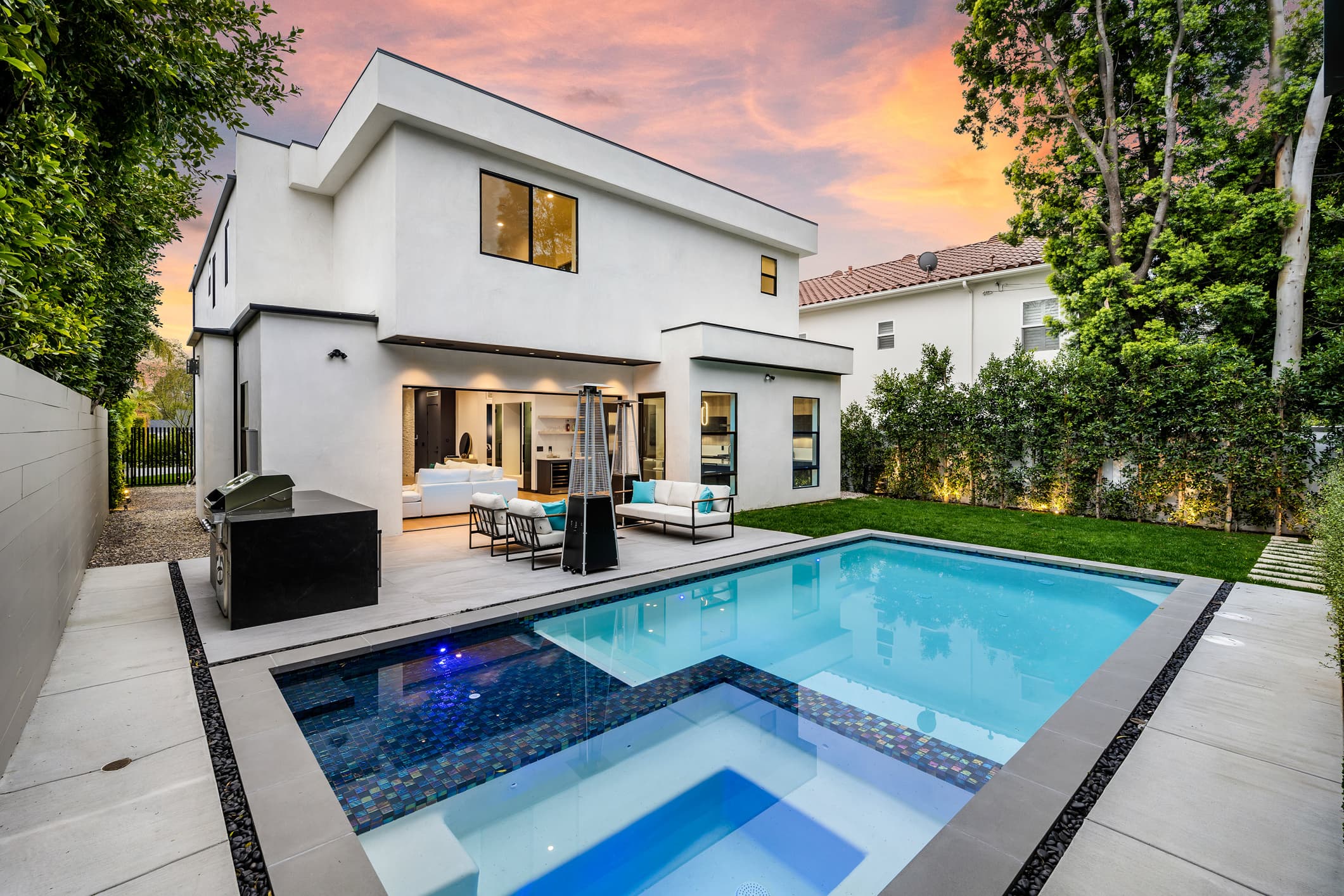
Zone 0 is the first 5 feet around your house, and the standard is simple: nothing in that band should be able to catch an ember and hold it. No bark, no wood chips, no firewood, no shrubs against the wall, no combustible fence tying into the siding. Gravel, pavers, concrete, and bare soil are what belong there instead.
That much has been settled science for years. What is not settled, as of August 2026, is the statewide rule itself. If you have read that Zone 0 is already California law, that is not quite right, and the difference matters for how you plan your yard. Here is the accurate picture for San Diego County.
Is Zone 0 actually law right now?
Three separate things are getting mixed together in most coverage. Untangling them tells you what you actually have to do.
| What | Status as of August 2026 |
|---|---|
| The statewide Zone 0 regulation | Not adopted yet. The Board of Forestry and Fire Protection is scheduled to vote on the final draft on August 19, 2026 |
| City of San Diego ordinance | Already adopted. The City moved ahead of the state in December 2025 with its own local rule |
| Rancho Santa Fe Fire Protection District | Already in force. Zone 0 has been required by district ordinance since 2022 |
The statewide rule traces back to AB 3074, signed in 2020, which created the ember resistant zone in statute and told the Board of Forestry to write the regulations. Governor Newsom signed Executive Order N-18-25 in February 2025, after the Los Angeles fires, ordering that work finished by the end of 2025. That deadline came and went. The current draft is dated April 2026, and the Board takes it up on August 19.
So if you live in unincorporated San Diego County, the statewide clock has not started. If you live inside the City of San Diego, or inside the Rancho Santa Fe Fire Protection District, you are already covered by a local rule. Check which one you are in before you assume you have years to plan.
What Zone 0 actually requires in the first 5 feet
The draft regulation measures 5 feet out from the exterior wall, or to the property line if that comes first. Attached decks, stairs, and pergolas count as part of the structure, so the 5 feet is measured from those too. A noncombustible patio does not count as structure.
Inside that band:
- No combustible mulch. Bark and wood chips are named explicitly. This is the single most common violation on a San Diego property, and it is the one landscape crews created in the first place.
- No fallen leaves, needles, or debris, including in gutters and on the roofline.
- Nothing stored under decks, stairs, or pergolas, and no firewood anywhere in the zone.
- Trees are allowed, but maintained: no dead branches, limbs at least 10 feet from a chimney, 5 feet above the roof, 1 foot off the walls, and none underneath the eaves.
- A vegetation free band directly against the house: nothing growing under the eaves, within 1 foot of the wall, within 2 feet of any window, door, or vent, or within 5 feet of an attached deck.
- Outside that band, only non woody plants. Ground covers and lawn under 3 inches are fine. Taller plantings up to 18 inches are allowed only in small clusters, spaced apart. Woody shrubs are not permitted anywhere in Zone 0.
- Combustible fences and gates cannot attach to the structure. Where one does today, it needs a 5 foot noncombustible span, usually a metal gate, at the connection.
- Sheds under 120 square feet are not allowed in the zone unless they are entirely noncombustible.
That woody shrub rule is the one that surprises people. A healthy, well kept boxwood hedge running along the foundation is exactly the kind of planting a lot of San Diego homes were designed around, and under the draft it does not survive the first 5 feet. Neither does the bougainvillea against the garage wall.
Does it apply to my property?
Two different triggers, and most homeowners guess wrong about which one they fall under.
State Responsibility Area (SRA). If your property sits in SRA, defensible space rules apply regardless of what hazard tier you are in. Much of the unincorporated county is SRA, including large parts of Rancho Santa Fe, Fairbanks Ranch, Elfin Forest, Ramona, Alpine, and Jamul.
Local Responsibility Area (LRA), Very High only. Inside city limits, the rule reaches you only if you are mapped Very High. That includes large shares of Poway, Carmel Valley, 4S Ranch, Del Sur, Scripps Ranch, and Rancho Bernardo, plus meaningful pockets of Del Mar, Carlsbad, Encinitas, Chula Vista, and the Mount Soledad canyons in La Jolla.
CAL FIRE published updated hazard maps in March 2025, the first refresh of the local maps since 2011, and they expanded coverage considerably across San Diego County. Carlsbad's Very High acreage nearly doubled. Cities that had never appeared on a hazard map at all showed up for the first time. If you last checked your address before 2025, check it again on the state's Fire Hazard Severity Zone viewer, because your designation may have changed without you hearing about it.
Rancho Santa Fe is a different situation
If you are in the Covenant, or anywhere else served by the Rancho Santa Fe Fire Protection District, none of the "wait and see what the Board votes" framing applies to you. The district adopted its own vegetation management ordinance in 2022, and it already defines Zone 0 as 0 to 5 feet with all combustible vegetation removed, mulch pulled back a minimum of 5 feet, and noncombustible fencing. That is a present requirement, not a proposal.
Two things make Rancho Santa Fe work different from the rest of the county:
The fire district reviews your landscape plan. RSFFPD requires landscaping and fuel modification plans to be submitted for approval on residential projects. Most of the county has no equivalent step. It means a landscape design in the Covenant has to clear a fire review that a design in Carmel Valley does not, and it is a poor moment to discover that after the plants are ordered.
The Art Jury reviews it too. Under Chapter 42 of the Association's Regulatory Code, landscape plans for new construction, alterations, pools, and fencing go to the Art Jury, whose stated purpose is maintaining a uniform and high standard of artistic result. The Art Jury also keeps jurisdiction after installation and can require more landscaping later.
Those two reviews are not in conflict on paper, but they pull in different directions, and the resolution is almost always design quality. A gravel strip thrown down against the foundation satisfies the fire district and gets you a conversation with the Art Jury. A properly detailed noncombustible perimeter, with stone, pavers, or a well built dry creek reading as an intentional part of the landscape, satisfies both. That is a design problem more than a compliance problem, and it is worth treating it as one from the start.
The other thing worth saying plainly about Rancho Santa Fe: the Witch Creek Fire came through here in October 2007, burned close to 198,000 acres, destroyed more than 1,200 homes, and drove the largest evacuation in county history. The Cedar Fire four years earlier burned 273,000 acres and killed 15 people. This is not a hypothetical risk being imported from somewhere else in the state.
What replaces the mulch
This is the part that actually lands on a landscape contractor, and it is most of the work.
The first 5 feet has to become a noncombustible surface that still looks like it belongs to the house. In practice that means one of a few things:
- Gravel or decomposed granite. The cheapest compliant surface, and the right answer for side yards and utility runs where nobody is looking.
- Pavers or stone. Where the perimeter is visible, a paver band turns the requirement into a finished detail. It reads as a mow strip or a perimeter walk rather than a fire buffer.
- Concrete. A poured perimeter walk or apron works well where you also want the drainage benefit of getting water away from the foundation.
- Rebuilt planting beds, moved out. Often the real fix is not replacing the bed but relocating it. Push the planting past the 5 foot line, put a hard surface in the gap, and the yard usually looks better than it did.
One caution worth stating, because it comes up constantly: artificial turf is not a Zone 0 solution. The draft permits living ground covers under 3 inches in the outer part of the zone. Synthetic turf is not a plant, its backing and infill are not noncombustible, and it should not be the surface you put against the house. It is an excellent product in the right place. Against the foundation in a Very High hazard zone is not that place.
If you are working through this yourself on a budget, our guide to affordable Zone 0 upgrades covers the DIY end of the list, including the parts that cost nothing.
How long will you have
Under the current draft, the phase in runs from whatever date the regulation takes effect, not from a fixed calendar date. New construction complies immediately. Existing homes get roughly 3 years for the housekeeping items, which are mulch, debris, firewood, gutters, and tree limbs, and up to 5 years for the structural work, meaning the vegetation free band, fences and gates, and sheds.
If the Board approves on August 19 and the emergency rulemaking clears, staff have said the regulations could take effect as early as September 2026. That would put the first deadline somewhere around 2029 and the second around 2031. Treat those as estimates rather than dates to plan a project around, because the regulation itself contains no calendar dates.
Two exceptions to the leisurely reading. Dead and dying branch removal is expected to be required immediately on adoption, because state law already requires it. And none of the state timeline applies if your local jurisdiction already has its own ordinance, which brings us back to the City of San Diego and Rancho Santa Fe.
The insurance argument is the one that pays now
Here is the part most homeowners miss. You do not have to wait for the regulation to get value out of this work.
California's Safer from Wildfires framework has been in force since October 2022, and it requires insurers that price by wildfire risk to give discounts for specific mitigations. One of the named items, in the Immediate Surroundings category, is a 5 foot ember resistant zone including fencing, with greenery removed and wood chips replaced by stone or decomposed granite. That is Zone 0, and the discount exists today.
The context in San Diego County makes this less abstract than it sounds. FAIR Plan policies in the county reached roughly 59,000 by September 2025, up about 379 percent in four years. In 2023 the county saw more policies nonrenewed than new policies written, one of only a handful of California counties where the private market actually shrank. The California FAIR Plan also began offering wildfire hardening discounts on policies dated November 15, 2025 or later.
So the honest framing is this: the mandate is probably coming, the deadline is probably years out, and the discount is available right now. For most homeowners that inverts the usual order of operations. This is not work you do at the deadline. It is work that pays for part of itself starting the year you do it.
Where this fits in a larger project
If you are already planning a landscape renovation, fold Zone 0 into the design rather than bolting it on later. The perimeter band interacts with drainage, with irrigation layout, with where the planting beds want to sit, and with how the hardscape meets the house. Solving it once, on paper, costs a fraction of retrofitting a finished yard.
For properties in Rancho Santa Fe and the surrounding Covenant communities, add the review timeline to your planning. Fire district approval and Art Jury approval both take time, and they are much easier to clear with a complete design than with a change order.
Modern Yardz designs and builds under California Contractor License #1082881, and every project starts with 2D plans and a photo realistic 3D rendering so you can see the perimeter detail before anything is dug. If you want to know what your first 5 feet needs, that is the right place to start.
Start Your Free Design Consultation
Tell us about your project and we'll be in touch within 24 hours. No pressure, no obligation.
Common questions
- Is Zone 0 the law in California right now?
- Not statewide. The Board of Forestry and Fire Protection is scheduled to vote on the final draft regulation on August 19, 2026, and it has not been adopted. However, the City of San Diego adopted its own Zone 0 ordinance in December 2025, and the Rancho Santa Fe Fire Protection District has required Zone 0 by district ordinance since 2022. Whether Zone 0 applies to you today depends on your local jurisdiction, not the state rule.
- What is Zone 0 in landscaping?
- Zone 0 is the ember resistant zone, the first 5 feet measured out from the exterior wall of your home, including from attached decks, stairs, and pergolas. The goal is that nothing in that band can catch a wind blown ember and hold it long enough to ignite the structure. In practice that means no bark or wood chip mulch, no firewood, no woody shrubs, no combustible fencing attached to the house, and a noncombustible surface such as gravel, pavers, stone, or concrete instead.
- Does Zone 0 apply to my San Diego home?
- Two triggers. If your property is in a State Responsibility Area, which covers much of the unincorporated county including large parts of Rancho Santa Fe, Elfin Forest, Ramona, Alpine, and Jamul, defensible space rules apply regardless of hazard tier. If you are inside city limits, the rule reaches you only if your parcel is mapped Very High, which includes large shares of Poway, Carmel Valley, 4S Ranch, Scripps Ranch, and Rancho Bernardo, plus pockets of Del Mar, Carlsbad, Encinitas, Chula Vista, and La Jolla. CAL FIRE updated the local maps in March 2025 and expanded coverage, so check your address again if you last looked before then.
- Can I keep mulch in my planting beds?
- Not within the first 5 feet of the house. Bark and wood chips are named explicitly as prohibited combustible mulches in the draft regulation and in the Rancho Santa Fe district ordinance already in force. Outside the 5 foot zone, mulch is still fine, and the Rancho Santa Fe ordinance limits it to a maximum of 3 inches in the 50 to 100 foot zone. The usual fix is to pull the bed line back past 5 feet and put gravel, pavers, or stone in the gap.
- Do I have to remove healthy shrubs against my house?
- Under the current draft, yes. The regulation permits only non woody plants inside Zone 0, which means woody shrubs are not allowed anywhere in the first 5 feet even if they are healthy and well maintained. Ground covers and lawn under 3 inches are permitted in the outer part of the zone. Trees are treated separately and may stay if they are maintained, with limbs kept off the walls, out from under the eaves, and 5 feet above the roof.
- Is artificial turf allowed in Zone 0?
- It should not be used against the house. The draft permits living ground covers under 3 inches in the outer part of the zone, but synthetic turf is not a plant, and its backing and infill are not noncombustible. Artificial turf is a good product in the right application, but the first 5 feet around a home in a Very High hazard zone is not that application. Use gravel, decomposed granite, pavers, stone, or concrete there instead.
- Do I have to replace my wood fence?
- Usually not the whole fence. Board of Forestry staff have been explicit that the intent is not wholesale replacement of existing wood fences. An existing wood fence more than 5 feet from the house is unaffected. Where a combustible fence or gate attaches to the structure, it needs a 5 foot noncombustible span at the connection, typically a metal gate, and that falls in the later phase of the timeline. New combustible fencing within 5 feet of the house would be prohibited once the rule takes effect.
- How long will I have to comply?
- Under the current draft, new construction complies immediately, existing homes get roughly 3 years for housekeeping items such as mulch, debris, firewood, gutters, and tree limbs, and up to 5 years for structural work such as the vegetation free band, fences, and sheds. Those clocks run from the regulation's effective date, which does not exist yet. Dead and dying branch removal is expected to be required immediately on adoption. None of this applies if your local jurisdiction already has its own ordinance.
- Will Zone 0 work lower my insurance premium?
- It can, and that discount is available now rather than at the deadline. California's Safer from Wildfires framework has required insurers that price by wildfire risk to discount for specific mitigations since October 2022, and a 5 foot ember resistant zone including fencing is one of the named items. The California FAIR Plan also began offering wildfire hardening discounts on policies dated November 15, 2025 or later. Ask your carrier what documentation they want before the work starts.
- What is different about Zone 0 in Rancho Santa Fe?
- Two things. Zone 0 is already required there by Rancho Santa Fe Fire Protection District ordinance, so there is no waiting for the state rule. And landscape and fuel modification plans have to be submitted to the fire district for approval, a step most of San Diego County does not have. In the Covenant, landscape plans also go to the Art Jury under Chapter 42 of the Regulatory Code. Both reviews are much easier to clear with a complete design than with a mid project change.
Ready to design your dream yard?
Tell us about your project. We'll send back a real plan, not a templated quote.
Book My Free Consultation→