
Why Backyard Design Before Construction Matters
Discover why backyard design before construction is crucial for control over costs and results. Ensure your outdoor project is a success!
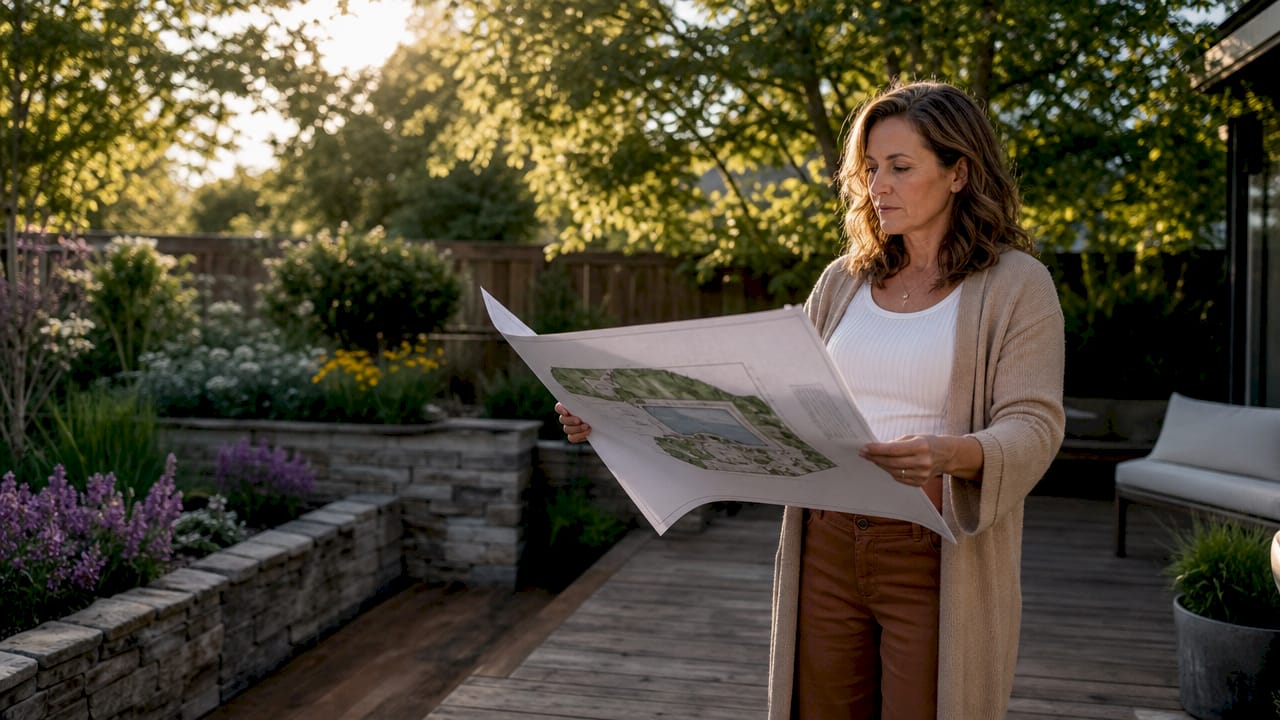
Backyard design before construction is defined as the complete planning process that establishes layout, drainage, infrastructure, permits, and functional zones before any ground is broken. Skipping this step is the single most expensive mistake San Diego homeowners make on outdoor projects. A luxury property in La Jolla or Rancho Santa Fe deserves the same architectural discipline indoors and out. Modern Yardz has completed 2,900+ projects across San Diego County, and the pattern is consistent: every project that starts with a thorough design phase finishes on time, on budget, and with a result the homeowner is proud to show.
Why backyard design before construction is the most important decision you'll make
The core benefit of designing before building is control. You control the budget, the timeline, the legal compliance, and the final result. Without a complete plan, contractors make assumptions. Assumptions become change orders. Change orders inflate costs and delay completion.
Pre-construction planning covers five critical areas:
- Layout and functional zones: Defining where the pool, kitchen, fire feature, seating, and planting areas live before materials are ordered prevents the most common error in outdoor construction: features that don't relate to each other spatially.
- Permits and HOA compliance: Landscape projects require layered permits for decks, pools, and walls, each with specific drawings and documentation. Securing these upfront prevents mid-build stops.
- Drainage and grading: Backyard grading and drainage directly prevent structural damage to patios and hardscape features. Grading planned after the fact often requires demolishing finished work.
- Infrastructure conduits: Installing utility conduits before pouring hardscape prevents costly demolitions during future upgrades. Gas lines, electrical runs, and irrigation sleeves must be placed before concrete is poured.
- Lighting zones: Well-planned lighting with smart zones integrated during design delivers atmosphere and safety without retrofit costs later.
Pro Tip: Before your first contractor meeting, sketch the three activities you do most in your backyard. Those activities define your zones. Every design decision should serve those zones first.
The importance of backyard planning also shows up in budget predictability. A complete design with 3D renderings locks in scope before construction begins. That means your $150,000 outdoor kitchen and pool project stays at $150,000 instead of climbing to $190,000 through mid-build decisions.

How does backyard design support health, wellness, and lifestyle?
A well-designed outdoor space does more than look good. It actively supports physical and mental health when the layout is planned with those outcomes in mind.
Spending at least 20 minutes in nature daily correlates with measurable stress reduction. That finding shapes how Modern Yardz approaches "stillness zones": quiet seating areas with natural materials, shade, and planting that invite daily use rather than occasional entertaining. A fire feature with a natural stone surround and low-profile seating wall creates exactly this kind of space.
"Effective garden design focuses on the physics of the space. Light, enclosure, and movement dictate comfort far more than exotic features." — Landscape design principle from Montrose Landscapes
Social design matters just as much. Social connection fostered by outdoor hubs is linked to reduced risk of early death and improved health outcomes, according to a 2025 WHO report. An outdoor kitchen with bar seating, a fire pit with a circular seating arrangement, or a pool with a shallow lounge shelf all create the conditions for regular social use.
Three wellness-driven design priorities worth building into your plan:
- Sightlines from interior rooms: Designing yard sightlines from key interior rooms improves mental restoration and strengthens indoor-outdoor connectivity. Your kitchen window view matters as much as the view from the patio.
- Gardening areas: Regular gardening can satisfy the recommended 30 minutes of daily physical activity for most adults, according to the American College of Sports Medicine. A raised planting bed or kitchen herb garden built into the design adds daily movement to your routine.
- Shade and enclosure: Covered zones under a louvered pergola or alumawood patio cover extend usable hours in San Diego's climate and create the sense of enclosure that makes outdoor spaces feel like rooms.
Common pitfalls of starting construction without a complete plan
Starting construction without a complete, permitted design leads to project halts, costly change orders, and inflated budgets. This is not a rare outcome. It is the default outcome when planning is skipped.
The five most common mistakes follow a predictable pattern:
- Feature-first shopping: Homeowners frequently choose features before establishing site-specific layout and functional flow. Buying a built-in grill before knowing where the outdoor kitchen sits means the gas line may run the wrong direction, or the kitchen blocks the primary sightline from the house.
- Ignoring drainage and grading: Flat-looking yards often have subtle grade problems. Water pooling under a travertine patio causes settling, cracking, and mold. Fixing drainage after hardscape is installed means tearing out finished work.
- Missing infrastructure sleeves: Forgetting to install conduit for electrical, gas, or irrigation before pouring concrete is one of the most expensive retrofits in outdoor construction. A $200 sleeve installed during grading prevents a $4,000 concrete saw job later.
- Permit gaps: Projects that begin without full permit approval face stop-work orders. In San Diego County, pools, retaining walls, and decks each carry separate permit requirements. A stop-work order on a pool mid-excavation can add weeks and significant cost.
- Poor functional flow: A backyard where the outdoor kitchen faces away from the seating area, or where the pool gate blocks the primary walkway, creates daily friction. These errors are invisible on a materials list but obvious the moment you use the space.
Pro Tip: Ask your design team to walk you through the space on paper before construction starts. Trace the path from your back door to the grill, to the pool, to the seating area. If that path crosses itself or feels awkward on paper, it will feel worse in real life.
What practical steps should homeowners take before construction begins?
Effective pre-construction planning follows a clear sequence. Skipping any step creates gaps that surface as problems during the build.
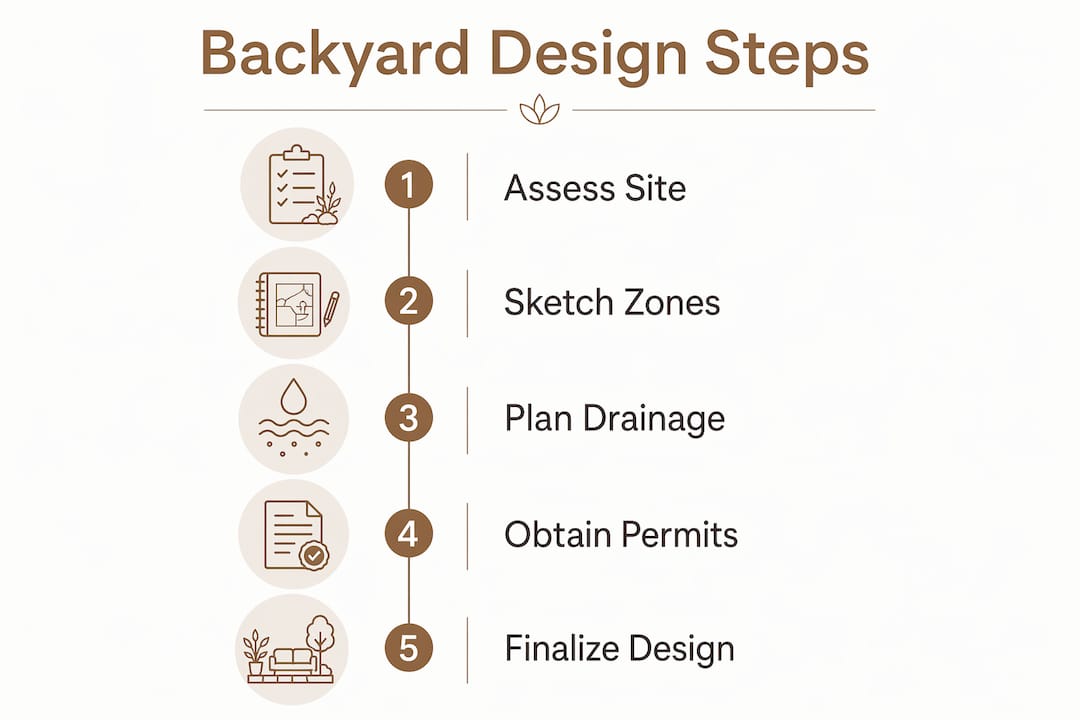
A professional site survey including soil testing, topography mapping, and property boundary confirmation is the non-negotiable first step. San Diego properties vary dramatically in soil composition, slope, and drainage behavior. A survey reveals constraints that change the design before a dollar is spent on materials.
After the survey, the planning sequence looks like this:
- Develop a phased master plan: Map the full vision first, then sequence construction by priority and budget. A master plan prevents the "we wish we had planned for that" conversation two years into a project.
- Engage a design-build firm for 3D renderings: Photo-realistic renderings let you approve the finished space before construction begins. Modern Yardz produces full 3D renderings for every project. Homeowners see exactly what they are getting before a shovel breaks ground.
- Plan hardscape and infrastructure together: Paver layouts, lighting conduit runs, irrigation zones, and gas lines must be coordinated on the same drawing. Treating them as separate decisions creates conflicts in the field.
- Confirm permits before scheduling construction: Pull permits for every applicable element. In San Diego, this includes pools, spas, decks, retaining walls, and outdoor kitchens with gas connections.
- Map zones and walking paths: Define the pool zone, dining zone, lounge zone, and garden zone on paper. Confirm that walking paths between zones are clear, logical, and wide enough for comfortable use.
The table below shows the difference between a design-first approach and a construction-first approach across key project factors:
| Factor | Design-first approach | Construction-first approach |
|---|---|---|
| Budget control | Locked in before build starts | Subject to change orders mid-build |
| Permit status | Approved before ground breaks | Risk of stop-work orders |
| Infrastructure | Conduits placed before hardscape | Costly retrofits after concrete pours |
| Functional flow | Tested on paper and in 3D | Discovered as problems during use |
| Timeline | Predictable from day one | Dependent on mid-build decisions |
You can use a landscape project planning workbook to document your zones, priorities, and site conditions before your first design meeting. Arriving prepared shortens the design phase and sharpens the final plan.
How does a design-build team prevent costly rework?
The design-build model is the most reliable structure for complex outdoor projects. A single team manages design, permitting, and construction. There are no handoffs between a designer and a separate contractor. There is no gap where the builder misreads the plan or substitutes materials without approval.
Professional design and permit advocacy prevents costly legal and structural issues even when a builder is selected early in the process. The designer's role is not decorative. It is technical. Permit drawings, drainage calculations, and structural details for retaining walls and pool shells require professional documentation that a builder alone cannot produce.
Modern Yardz operates exclusively on the design-build model, holding California Contractor License #1082881 and managing every phase under one roof. The same team that draws the 2D architectural plan also pours the concrete, lays the travertine, and installs the PebbleTec pool finish. That continuity eliminates the communication failures that cause rework. Understanding what outdoor living space design actually involves helps homeowners ask the right questions before signing any contract.
Pro Tip: When interviewing design-build firms, ask specifically who manages permitting. If the answer is "the homeowner handles permits," that is a red flag. A full-service firm handles permits as part of the design phase.
Key Takeaways
Backyard design before construction is the single most effective way to protect your investment, control your budget, and build an outdoor space that functions exactly as intended from day one.
| Point | Details |
|---|---|
| Design before breaking ground | Complete layout, drainage, and permit plans before any construction begins to avoid costly rework. |
| Infrastructure must be planned early | Conduits for gas, electrical, and irrigation must be placed before hardscape is poured. |
| Permits protect your project | Securing all required permits upfront prevents stop-work orders and legal complications mid-build. |
| Wellness benefits require intentional design | Stillness zones, sightlines, and social hubs must be planned deliberately to deliver health and lifestyle value. |
| Design-build teams reduce risk | A single team managing design and construction eliminates handoff errors and keeps scope locked. |
The case for patience before the first shovel
I have seen the same mistake repeated across hundreds of projects. A homeowner falls in love with a feature, a pool shape or an outdoor kitchen configuration, and pushes to start construction before the full plan is finished. The feature gets built. Then the problems appear. The drainage runs toward the house. The kitchen blocks the view from the living room. The lighting conduit was never installed, so retrofitting it means cutting through finished travertine.
The homeowners who get the best results are the ones who treat the design phase as the most important phase. Not the most exciting phase. The most important one. They spend time on the 3D rendering. They walk through the space on paper. They ask hard questions about drainage and permit timelines before they ask about finish colors.
A well-designed backyard is not just a beautiful space. It is a space that works every day, for every use you planned for it. In San Diego's real estate market, a masterfully executed outdoor environment adds measurable property value and daily quality of life. That return only comes when the design comes first. Patience in the planning phase pays every time you use the space for the next 20 years.
— Thomas Jackson
Modern Yardz: design-first luxury outdoor living in San Diego
Modern Yardz brings 49+ years of experience and 2,900+ completed projects to every backyard in San Diego County. Every project starts with a full site evaluation, 2D architectural plans, and photo-realistic 3D renderings that you approve before construction begins. There are no subcontractors, no handoffs, and no surprises. From custom pools and travertine paver systems to outdoor kitchens and louvered pergolas, every element is designed and built by one team under one license. If you are planning a backyard project in La Jolla, Del Mar, Carmel Valley, or Rancho Santa Fe, contact Modern Yardz for a free consultation with San Diego's premier luxury design-build firm.
FAQ
Why does backyard design need to happen before construction?
Design before construction locks in layout, drainage, permits, and infrastructure before costs are committed. Starting construction without a complete plan leads to change orders, stop-work orders, and expensive retrofits.
What happens if you skip the design phase?
Skipping design typically results in feature placements that conflict with drainage, missing utility conduits under finished hardscape, and permit gaps that halt construction mid-build.
How long does the backyard design phase take?
The timeline varies by project complexity, but a thorough design phase for a luxury San Diego backyard typically spans several weeks and includes site surveys, 3D renderings, and permit applications before construction is scheduled.
Do I need permits for a backyard project in San Diego?
Yes. Pools, spas, decks, retaining walls, and outdoor kitchens with gas connections each require separate permits in San Diego County. A design-build firm handles permit documentation as part of the pre-construction process.
What is the advantage of hiring a design-build firm over separate designers and contractors?
A design-build firm manages design, permitting, and construction under one team. That structure eliminates handoff errors, keeps scope locked, and gives you a single point of contact from the first consultation through the final walkthrough.
Recommended
Start Your Free Design Consultation
Tell us about your project and we'll be in touch within 24 hours. No pressure, no obligation.
Ready to design your dream yard?
Tell us about your project. We'll send back a real plan, not a templated quote.
Book My Free Consultation→

