Homeowners: Avoid 1 to 4 Week Permit Delays in Outdoor Shower Design
Design an outdoor shower homeowners can actually build: style choices, durable materials, U.S. permit triggers, drainage options, and when to DIY or hire...

The best outdoor shower design prioritizes drainage and durable, moisture-rated materials while placing privacy and proximity to existing plumbing first. A simple cold-water rinse station is a reasonable weekend project for most homeowners. Anything involving a pressurized supply line, a drain tie-in, a water heater, or a permanent foundation moves into licensed-contractor territory, and understanding that line early saves both money and rework.
TL;DR: - A simple hose-fed outdoor shower can be installed quickly and cheaply, but adding plumbing, drainage, or a structure requires permits and professional help. - Placement near existing water and power lines simplifies installation, while proper drainage and moisture barriers are critical for longevity. - Materials like cedar, marine-grade metal, frost-rated tile, and stainless fixtures withstand outdoor conditions with minimal maintenance. - Building a fully enclosed, heated shower with permits can take several weeks and costs thousands, while DIY options are more affordable and faster. - Combining the shower design with overall landscape planning creates a more durable and integrated feature that enhances the property's architecture.
Table of Contents
- Design styles that match your site and how you'll use it
- Materials and finishes that hold up outdoors
- How plumbing, drainage, and permits shape your design
- Siting, privacy, and microclimate details that affect longevity
- Flooring choices that prevent standing water and slips
- What to budget for time and money
- Deciding between a DIY build and a licensed contractor
- Why the best outdoor showers are treated as architecture, not add-ons
- Bringing your outdoor shower into a larger design-build plan
- Sources
- FAQ
Design styles that match your site and how you'll use it
Before choosing tile or hardware, pick a style that fits your yard's constraints and how the shower will actually be used. Each style carries its own trade-offs in privacy, upkeep, and plumbing complexity.
- Open-air rinse: A single post or wall-mounted showerhead over gravel or pavers, best for quick beach or pool rinses with minimal enclosure and low maintenance.
- Cedar cabana: A partially roofed wood structure with slatted walls, offering strong privacy and a warm, resort-like look, though it demands regular sealing.
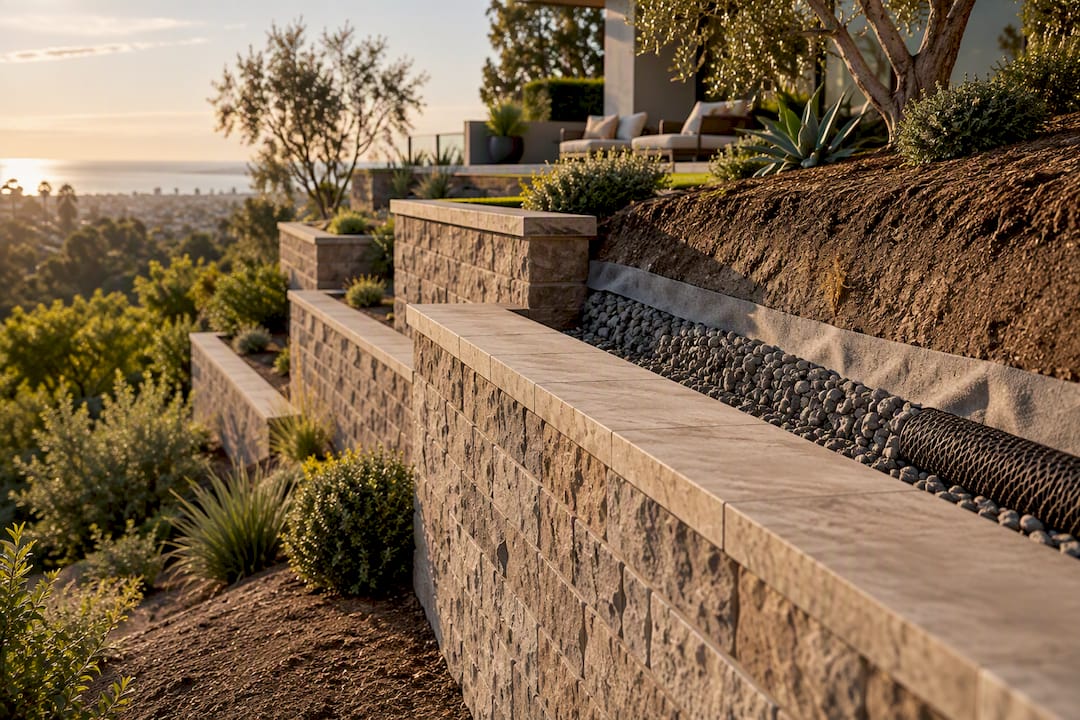
- Stone alcove: Built into a retaining wall or garden nook using natural stone, blending permanence with a garden setting but requiring careful waterproofing at the wall junction.
- Pool-integrated shower: Positioned steps from the pool deck, sharing existing plumbing runs and drainage, which cuts installation cost and complexity.
- Minimalist post-mount: A freestanding fixture with no walls, suited to private lots where screening isn't a concern and upkeep needs to stay minimal.
Whichever style you choose, placement close to the house or an existing hose bib or hot water line simplifies the plumbing work considerably, a detail explored further in outdoor living space design.
Materials and finishes that hold up outdoors
Exterior showers face relentless moisture, UV exposure, and, in colder climates, freeze-thaw cycling, so material choice determines whether the structure looks good in year one or year ten.
- Wood framing: Cedar and teak resist rot naturally and weather to an attractive gray, while composite boards need less sealing but offer a more uniform look.
- Metal components: Marine-grade aluminum or galvanized steel resist corrosion far better than standard steel framing exposed to salt air or sprinkler overspray.
- Tile and stone: Frost-rated porcelain and natural stone both perform well, provided the installer uses a proper waterproof membrane and grout system rated for constant wet exposure.
- Fixture finishes: Stainless steel 316, PVD coatings, and solid brass resist corrosion better than chrome or standard stainless, which pit and streak within a season or two near the coast.
Cedar and teak need annual oiling to stay watertight, composite boards need only occasional cleaning, and stone or tile need the least routine attention once the membrane work behind them is done correctly.
How plumbing, drainage, and permits shape your design
Permitting is where most outdoor shower projects get complicated, and knowing the triggers before you start saves weeks of delay.
- Pressurized supply or drain tie-in: Connecting to a home's water supply or sewer line commonly requires a plumbing permit, according to Doineedapermit.
- Electrical or heater work: Adding a tankless heater or lighting circuit typically requires an electrical permit alongside the plumbing one, with inspections for each.
- Permanent foundations or enclosures: A roofed structure, footings, or a fully enclosed cabana usually triggers a building permit, and Houzz's guide to adding an outdoor shower notes that plan review for these projects commonly runs 1 to 4 weeks.
Drainage strategy depends on your site and local code. Options include daylight discharge away from the house, a French drain, a dry well, or a tie-in to sewer or septic. This Old House's drainage installation guide recommends a perforated pipe wrapped in geotextile fabric, bedded in crushed stone, and pitched consistently to carry water safely away from the foundation. Skipping this step risks water pooling against the house, a problem covered in more depth in this guide to backyard drainage solutions.
Before you buy materials, call your local building department with your exact scope and a few site photos. A five-minute call often clarifies whether your project needs a permit at all.
Siting, privacy, and microclimate details that affect longevity
Where you put the shower matters as much as how you build it. A location near existing hot and cold lines and close to a mudroom or laundry door shortens plumbing runs and makes daily use more practical, a point echoed in Homebuilding's outdoor shower guidance, which also notes that a sunny spot helps walls and flooring dry faster and reduces mildew risk.
- Slatted screens or trellis panels offer airflow and partial privacy but can shift in strong wind if not anchored well.
- Offset panels set at an angle block direct sightlines without fully enclosing the space, a middle ground between open-air and cabana styles.
- Permanent walls give the most privacy but cost more and usually require a building permit.
If you're placing the shower against the house, treat it as its own structure with a proper moisture barrier rather than mounting it flush to siding, since experts generally recommend a self-contained approach to avoid long-term moisture damage to the home.
Flooring choices that prevent standing water and slips
Flooring is where many outdoor showers fail quietly, one puddle at a time. The floor needs a slope of roughly a quarter inch per foot toward the drain, and it's worth testing that slope with a hose before finishing the surface.
Raised slatted wood or composite decks let water pass through to gravel below and dry quickly, permeable resin surfaces offer a smooth, barefoot-friendly finish, and simple gravel beds with a trench drain cost less but feel less refined underfoot. Whatever you choose, specify slip-rated material and stainless fasteners, and behind any tile, insist on a continuous waterproof membrane and cement backer board, since FineGardening's guide to building an outdoor shower identifies the pan-to-wall junction as the most common failure point in these projects.

Pro Tip: Build in a removable grate or clean-out access over the drain so hair, sand, and debris can be cleared without tearing up the floor.
What to budget for time and money
Costs and timelines vary widely depending on scope, so it helps to think in three tiers.
- Simple rinse setup: A hose-fed fixture with no permanent plumbing can be installed in days for a modest cash outlay, often just the cost of the fixture and fittings.
- Moderate plumbed shower: A shower tied into existing hot and cold lines with a modest enclosure typically takes 1 to 3 weeks to build once materials arrive.
- Full enclosed, heated shower with permits: A tiled, roofed structure with its own water heater involves permit review before construction even begins, and Houzz notes that full outdoor living transformations often need several weeks for planning, permitting, and construction combined.
For a broader sense of how multi-phase outdoor projects come together on a schedule, this breakdown of outdoor kitchen build timelines offers a useful comparison.
Deciding between a DIY build and a licensed contractor
Simple tasks like assembling a post-mount fixture, running a garden hose line, or building a gravel floor are well within reach for most homeowners with basic tools. Excavation for drainage, any tie-in to a pressurized water line or sewer and septic system, structural framing for an enclosure, and heater installation call for a licensed plumber, electrician, or general contractor.
DIY work on pressurized systems or attachments to the house wall carries real risk: a poor seal invites moisture into wall assemblies, and unpermitted work can fail inspection later or complicate a home sale. When you do hire out, verify the contractor's license and insurance directly, and ask for at least two comparable bids before signing anything.

Why the best outdoor showers are treated as architecture, not add-ons
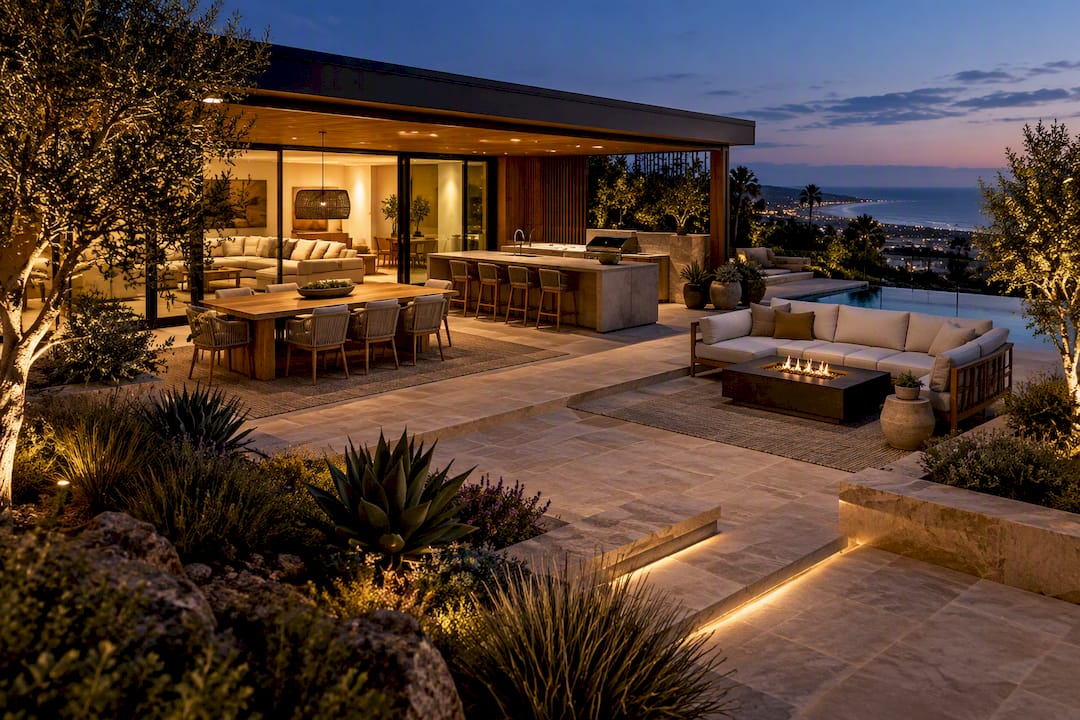
An outdoor shower earns its place in a landscape when it's designed alongside the pool, patio, and plantings around it rather than bolted on afterward. Treated that way, it becomes one more deliberate architectural feature of the property.
— Thomas Jackson
Bringing your outdoor shower into a larger design-build plan
Homeowners planning a shower as part of a larger pool deck, cabana, or backyard renovation benefit from having one team handle the design, the permitting, and the construction, rather than coordinating a plumber, a carpenter, and a tile setter separately. Modern Yardz builds these projects under a single in-house team, backed by California Contractor License #1082881, with photo-realistic 3D renderings prepared before any construction begins.
- One point of contact from initial consultation through final walkthrough, with no subcontractor handoffs.
- Premium materials only, from natural stone surrounds to solid-brass fixtures suited to a resort-caliber finish.
- Full permitting support, so the drainage and plumbing decisions above are handled correctly the first time.
For homeowners in La Jolla, Rancho Santa Fe, Del Mar, Coronado, and Carmel Valley planning a shower as part of a broader backyard design and remodel, book a consultation to see how the space could come together in 3D before a single shovel touches the ground.
Sources
- How to Add an Outdoor Shower
- How to Install Drainage for an Outdoor Shower - This Old House
- Doineedapermit
- Creating an Outdoor Shower - FineGardening
FAQ
Do I need a permit for an outdoor shower?
It depends on the scope. A simple cold-water rinse with no buried supply line may be exempt in some jurisdictions, but a shower tied into pressurized supply, drainage, or electrical service commonly requires a plumbing or building permit.
Are outdoor showers a good idea?
Yes, for most homeowners with a pool, garden, or beach access nearby, since they cut down on sand and chlorine tracked into the house and extend the outdoor living space. The right fit depends on your site's privacy, drainage, and plumbing access.
What is the average cost of an outdoor shower?
Costs range from a simple hose-fed fixture costing only a few hundred dollars to a fully enclosed, heated, and permitted shower running several thousand dollars once fixtures, tile, and permitting are included, according to Houzz's project guidance. The final figure depends heavily on enclosure type and whether hot water and permits are involved.
What are the must-haves for an outdoor shower?
A properly sloped floor, reliable drainage, and a waterproof detail where the shower pan meets any wall are the essentials, since FineGardening identifies that junction as the most common point of failure. Slip-rated flooring, corrosion-resistant fixtures, and a clear privacy plan round out a design that lasts.
Recommended
Start Your Free Design Consultation
Tell us about your project and we'll be in touch within 24 hours. No pressure, no obligation.
Ready to design your dream yard?
Tell us about your project. We'll send back a real plan, not a templated quote.
Book My Free Consultation→