Why Every Backyard Project Needs a Licensed Contractor
Discover why every backyard project needs a licensed contractor. Ensure legal protection, quality work, and secure your investment today!
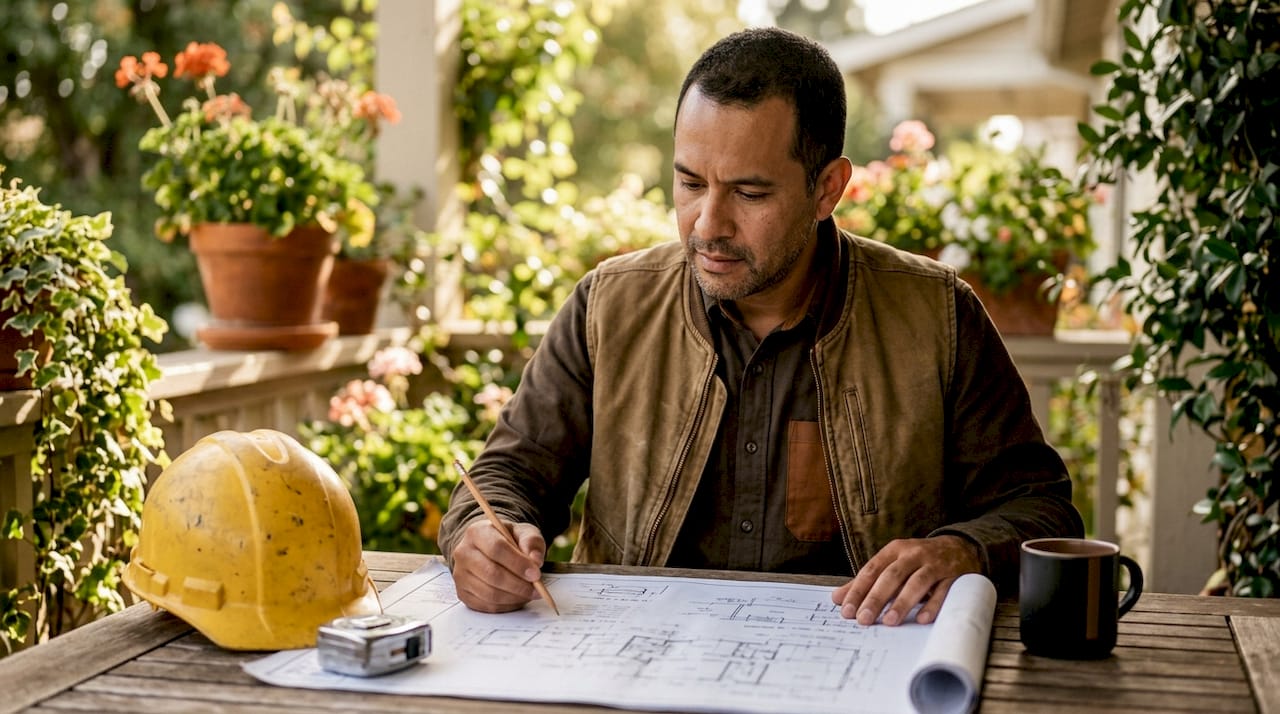
A licensed contractor is a professional who has passed state-mandated trade exams, verified years of field experience, and secured liability insurance and bonding before touching a single project. For San Diego homeowners planning a backyard renovation, hiring a licensed contractor is not optional. It is the legal and financial foundation that protects your property, your investment, and your family from the start.
California's Contractors State License Board (CSLB) governs all residential construction work in the state. Any project valued above $500 in labor and materials requires a licensed contractor under California law. Modern Yardz holds California Contractor License #1082881 and has completed 2,900+ projects across San Diego County, operating under full compliance with CSLB standards. Understanding why backyard project needs licensed contractor oversight is the first step toward protecting a property worth $1.5M or more.
Why does a backyard project need a licensed contractor?
Licensing is a comprehensive risk management framework, not a bureaucratic formality. A licensed contractor has passed trade exams and carried verified experience before the state grants them the right to work on your home. That process filters out unqualified operators before they ever set foot on your property.
Beyond qualifications, licensing requires contractors to carry general liability insurance and workers' compensation coverage. Licensed contractors carry liability and workers' comp insurance that shifts financial responsibility for job-site injuries and property damage away from you. Without that coverage, a worker injured on your property becomes your legal and financial problem.
California law adds another layer of protection that most homeowners do not know about. Unlicensed contractors cannot legally enforce contracts or collect payment in California. You can sue to recover every dollar paid to an unlicensed contractor, even if you accepted the completed work. That legal standing exists only because the contractor lacked a license.
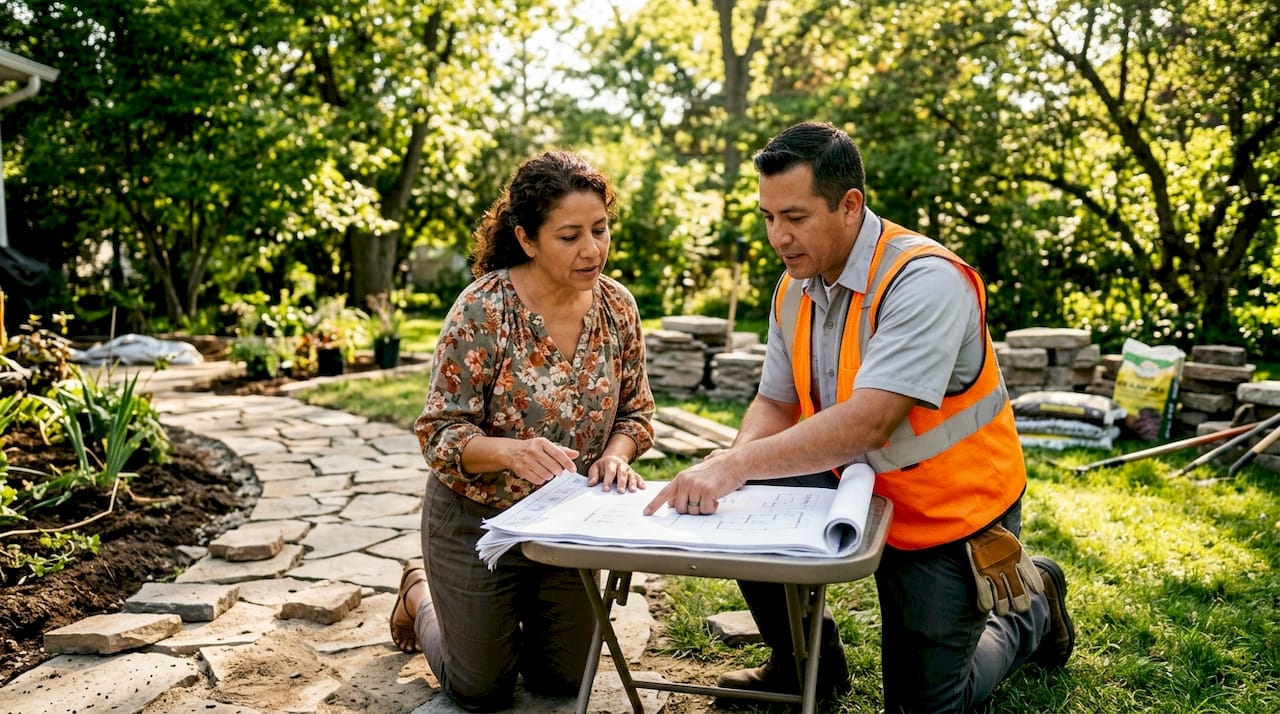
The CSLB also operates a formal complaint and recovery process. If a licensed contractor causes damage or abandons a project, you have a documented legal path to restitution. That path disappears entirely when you hire someone without a license.
Pro Tip: Before signing any contract, verify the contractor's license number directly on the CSLB website at cslb.ca.gov. The lookup is free, takes under two minutes, and confirms license status, insurance, and any disciplinary history.
- Licensing requires passing state trade exams and verifying field experience
- Licensed contractors carry liability insurance and workers' compensation coverage
- California law bars unlicensed contractors from suing for payment
- CSLB provides a formal complaint and recovery process for licensed contractor disputes
- Handyman exemptions never apply to electrical, plumbing, gas, HVAC, or structural work
What are the real financial risks of unlicensed backyard work?
The financial exposure from hiring an unlicensed contractor on a luxury backyard project is severe. Homeowners face losses between $35,000 and $75,000 on average when unlicensed contractors abandon projects or deliver substandard work. Total losses, including repairs and legal costs, can exceed $150,000 on a single project.
"Unpermitted work leads to insurance claim denials and creates serious complications when selling a home. Homeowners who hire unlicensed contractors often discover these consequences years after the project ends, when the damage is already done and the contractor is long gone."
Insurance denial is one of the most damaging consequences. Homeowner's insurance policies deny claims related to damage caused by unlicensed or unpermitted work. That means a retaining wall failure, a drainage collapse, or a fire feature gas leak caused by unlicensed work comes entirely out of your pocket.
Structural failures compound the financial damage. Poor grading and compaction by unlicensed contractors can cause foundation cracks, structural failures, and voided home warranties. A cracked foundation traced to an unpermitted backyard grading job can cost more to repair than the original project was worth.
Resale complications add a third financial layer. Unpermitted structures discovered during a home inspection trigger mandatory retroactive permits, costly modifications, or in the worst cases, mandatory demolition. A $2M La Jolla property with an unpermitted pool or outdoor kitchen faces a material reduction in appraised value and a delayed or failed sale.
The risks of unlicensed contractors become especially acute at the investment levels common in San Diego's luxury market, where a single backyard transformation can represent $100,000 to $300,000 in construction costs.
Which backyard elements require a licensed contractor and permits?
Most significant backyard work in California requires both a permit and a licensed contractor. The threshold is lower than most homeowners expect. The table below outlines common backyard elements and their licensing and permit requirements.
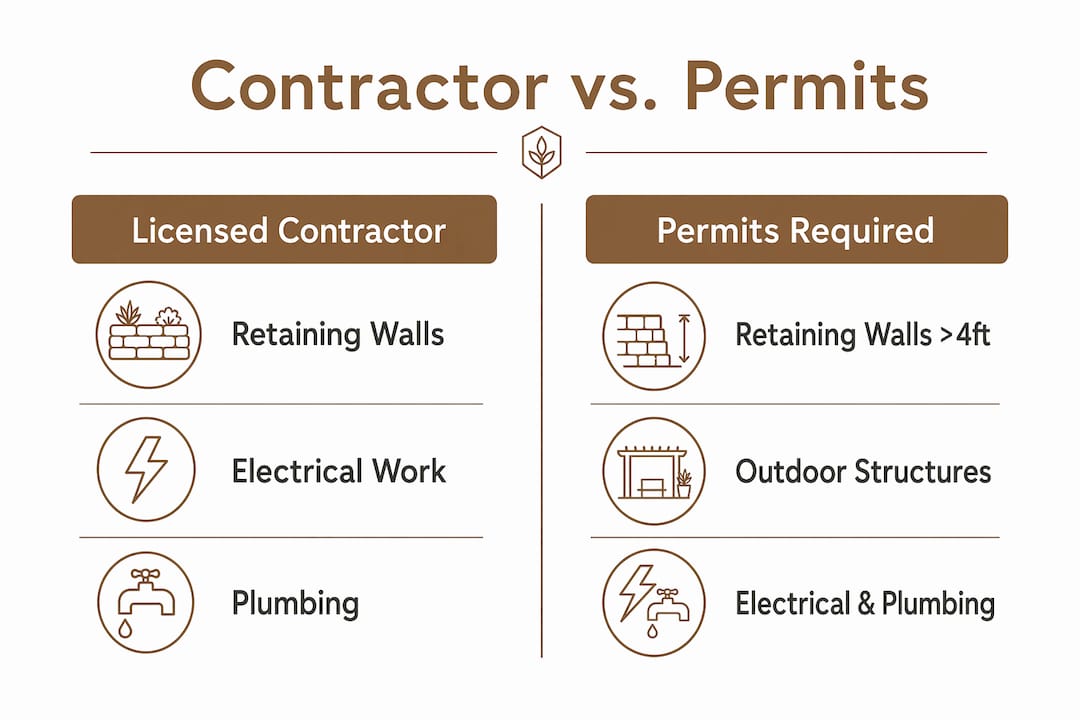
| Backyard Element | Permit Required? | Licensed Contractor Required? |
|---|---|---|
| Retaining walls over 4 ft | Yes | Yes |
| Custom pools and spas | Yes | Yes (C-53 Pool Contractor) |
| Outdoor kitchens with gas | Yes | Yes (gas and electrical) |
| Patio covers and pergolas | Yes (most cases) | Yes |
| Grading and drainage systems | Yes | Yes |
| Fences under 7 ft | Generally no | Recommended |
| Sheds under 200 sq ft | Generally no | Recommended |
Structures under 200 sq ft like small sheds and fences under 7 feet may be exempt from permit applications in many California jurisdictions. That exemption does not mean those structures are exempt from building codes. Permit-exempt structures still must comply with all applicable codes, or they face mandatory demolition.
Electrical, plumbing, gas, and HVAC work always require a licensed contractor, regardless of project size or cost. Electrical, plumbing, and structural work never qualifies for a handyman exemption under California law. Any contractor who claims otherwise is misrepresenting their legal standing.
Drainage and grading deserve special attention. Backyard drainage solutions that involve regrading, French drains, or surface water management require engineered plans and licensed installation. Impervious surface coverage limits, typically 40–60% of lot area depending on the jurisdiction, also affect patio and pool deck sizing and must be calculated by a licensed professional.
How to verify a contractor's license before hiring
Verifying a contractor's license takes less time than reviewing a bid, and it is the single most important step in protecting your investment. Follow this process before signing any contract.
- Look up the license number on the CSLB website. Go to cslb.ca.gov and enter the contractor's license number. Confirm the license is active, the classification matches the work scope, and no disciplinary actions are on record.
- Request certificates of insurance. Ask for current general liability and workers' compensation certificates. The certificate should name you as an additional insured for the duration of the project.
- Confirm bonding. California requires licensed contractors to carry a $25,000 contractor's bond. Verify the bond is active and current.
- Check references from comparable projects. Ask for references from luxury residential projects of similar scope and scale. A contractor who has built custom pools and outdoor kitchens in Rancho Santa Fe or Del Mar has a demonstrably different track record than one who has not.
- Review the written contract in detail. The contract must specify scope of work, permit responsibilities, payment schedule, and liability terms. Limit initial deposits to 10–20% of total project cost. Higher upfront payment demands are a warning sign.
- Confirm the contractor pulls permits. A licensed contractor pulls permits in their own name. If a contractor asks you to pull your own permits, that is a clear indicator they are not licensed for the work.
Modern Yardz handles every step of this process internally. California Contractor License #1082881 is active and verifiable on the CSLB website. The firm carries full liability and workers' compensation coverage, pulls all required permits, and manages the entire backyard design process from architectural plans through final inspection.
Pro Tip: Ask every contractor candidate how they handle permit applications. A licensed professional will describe a clear, specific process. Vague answers or suggestions that permits are unnecessary are disqualifying.
Key Takeaways
Hiring a licensed contractor for any backyard renovation is the single most effective way to protect your property value, legal standing, and financial investment.
| Point | Details |
|---|---|
| Licensing protects your finances | Unlicensed work can cost $35,000–$75,000 in repairs, with total losses exceeding $150,000. |
| Insurance coverage depends on licensing | Homeowner's insurance denies claims for damage caused by unlicensed or unpermitted work. |
| Most backyard work requires permits | Pools, outdoor kitchens, grading, and structural elements all require licensed contractors and permits. |
| California law favors the homeowner | You can recover all payments made to an unlicensed contractor, even if you accepted the work. |
| Verify before you sign | Confirm license status, insurance, bonding, and permit responsibility before any contract is executed. |
The cost of cutting corners on a $2M property
I have seen the aftermath of unlicensed backyard work on luxury San Diego properties more times than I care to count. The pattern is always the same. A homeowner receives a bid that is meaningfully lower than the others, skips the license verification step, and signs a contract. Six months later, they are dealing with a drainage failure that has undercut a patio foundation, an insurance adjuster who has denied the claim because the work was unpermitted, and a contractor who is unreachable.
What strikes me most is that the financial loss is rarely the worst part. The worst part is the loss of control. With a licensed contractor, you have legal recourse, insurance coverage, and a permit record that documents every phase of construction. With an unlicensed operator, you have none of that. You are entirely exposed.
The importance of hiring professionals becomes most visible on high-value projects. A $150,000 outdoor living build in Coronado or Carmel Valley is not a place to test an unknown contractor's claims. The craftsmanship, the code compliance, and the permit record all become part of your property's permanent history. They show up in appraisals, in inspections, and in the price a buyer is willing to pay.
Licensing is not a credential to check off a list. It is the mechanism that makes accountability possible. Every licensed contractor has skin in the game: their license, their bond, and their insurance are all at risk if they perform substandard work. That accountability structure does not exist without the license.
— Thomas Jackson
Work with a licensed San Diego luxury contractor
Modern Yardz has built 2,900+ luxury outdoor environments across San Diego County under California Contractor License #1082881, maintaining a perfect 5.0-star Google rating across every project. Every build begins with 2D architectural plans and photo-realistic 3D renderings, so you approve the complete design before construction starts. Permits, material procurement, and full construction are managed by one team with zero subcontractor handoffs.
For homeowners in La Jolla, Del Mar, Rancho Santa Fe, and Coronado planning a backyard transformation, the first step is a conversation. Explore Modern Yardz's licensed luxury landscape services or schedule a free consultation to discuss your project with a licensed professional who has built at this level for decades.
FAQ
What work requires a licensed contractor in California?
Any construction project valued above $500 in labor and materials requires a licensed contractor in California. Electrical, plumbing, gas, HVAC, and structural work always require a license, regardless of project cost.
Can I recover money paid to an unlicensed contractor?
Yes. California law allows homeowners to recover all payments made to an unlicensed contractor, even if the work was completed and accepted. Unlicensed contractors cannot legally sue for payment in California.
Does unpermitted backyard work affect home resale?
Unpermitted structures discovered during a home inspection can require costly retroactive permits, mandatory modifications, or demolition. They also trigger insurance claim denials and can reduce appraised property value.
How do I verify a contractor's license in California?
Enter the contractor's license number at cslb.ca.gov. The free lookup confirms whether the license is active, what classifications it covers, and whether any disciplinary actions have been filed.
What is the risk of hiring an unlicensed landscaping contractor?
Financial losses average $35,000–$75,000 per incident when unlicensed contractors perform substandard work or abandon projects. Total losses including repairs, legal costs, and insurance denials can exceed $150,000.
Recommended
Start Your Free Design Consultation
Tell us about your project and we'll be in touch within 24 hours. No pressure, no obligation.
Ready to design your dream yard?
Tell us about your project. We'll send back a real plan, not a templated quote.
Book My Free Consultation→