Under 400 sq ft Pools: San Diego Homeowners' 2026 Design First Trends
San Diego homeowners favor compact, design first luxury pools in 2026. Learn about dark reflective finishes, wellness zones, nanobubble care and efficient...
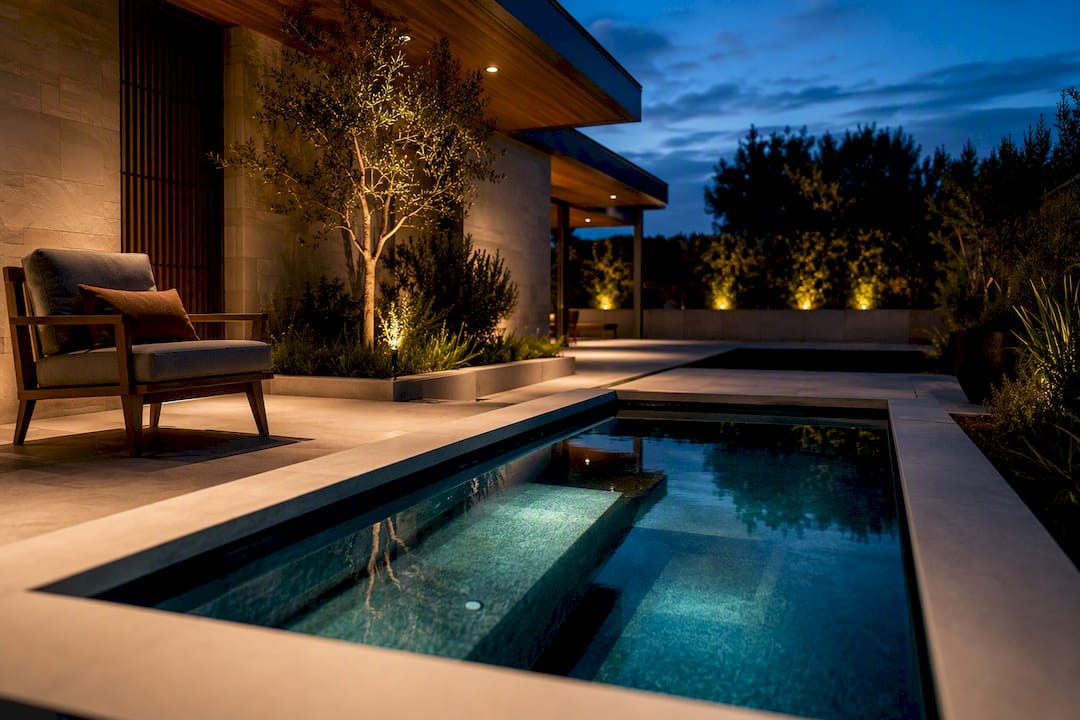
In 2026, luxury pools favor architectural integration over sheer size, with geometric forms, dark reflective finishes, wellness features, and nanobubble sanitization, defining the highest-end backyards. This shift has been observed across many demanding properties in San Diego, with a consistent pattern: homeowners want a resort feel, not a resort footprint.
TL;DR: - Pools will prioritize architectural integration, with smaller, precisely shaped designs that match the home's geometry rather than large freeform forms. - Dark interior finishes and mixed materials like stone and glass tile will define luxury aesthetics, emphasizing reflections and visual depth. - Compact pools with wellness features such as plunge zones, hydrotherapy jets, and sun ledges will deliver resort-like experiences in smaller footprints. - Standard water-sanitizing technology will include nanobubbles, while automation and LED lighting will be common for remote control and nighttime ambiance. - Sustainable systems like variable-speed pumps, solar heating, and water covers will be essential for lowering ongoing costs and supporting long-term value.
Table of Contents
- What Are the Top Pool Trends for 2026?
- Why Are Pools Getting Smaller but Smarter?
- What Finishes and Materials Define 2026 Pools?
- How Are Wellness Features Changing Small Pools?
- What Technology Now Comes Standard on Luxury Pools?
- Which Sustainability Choices Actually Lower Long-Term Cost?
- Which Pool Trends Hold Long-Term Value?
- Why Design-Build Delivery Matters for These Trends
- Bring These 2026 Pool Trends to Your Own Backyard
- Sources
- FAQ
What Are the Top Pool Trends for 2026?
Luxury pool design has moved past sheer square footage toward precision, restraint, and function. Trade coverage from Master Pools Guild and design commentary from Forbes both point to the same eight shifts defining the category this year.
- Geometric, architecturally integrated shapes — rectangles and crisp lines that mirror the home's own architecture rather than freeform curves.
- Dark interior finishes — charcoal, deep blue, and graphite plaster that turn water into a mirror.
- Compact-luxury footprints — smaller pools with higher spend per square foot on finish and function.
- Wellness zones — cold plunges, tanning ledges, and hydrotherapy jets built into the shell itself.
- Nanobubble sanitization — a water-care technology reducing reliance on traditional chemicals.
- Mixed-material surfacing — natural stone, glass tile, and stainless steel vessels combined in one build.
- Programmable LED lighting — pools designed to function as nighttime art pieces.
- Efficient, sustainable systems — variable-speed pumps, solar heating, and water-saving covers as standard equipment, not upgrades.
Each of these carries a procurement implication. A homeowner planning a 2026 build should be budgeting for finish quality and water systems before footprint, because that is where the category has moved its money.
Why Are Pools Getting Smaller but Smarter?
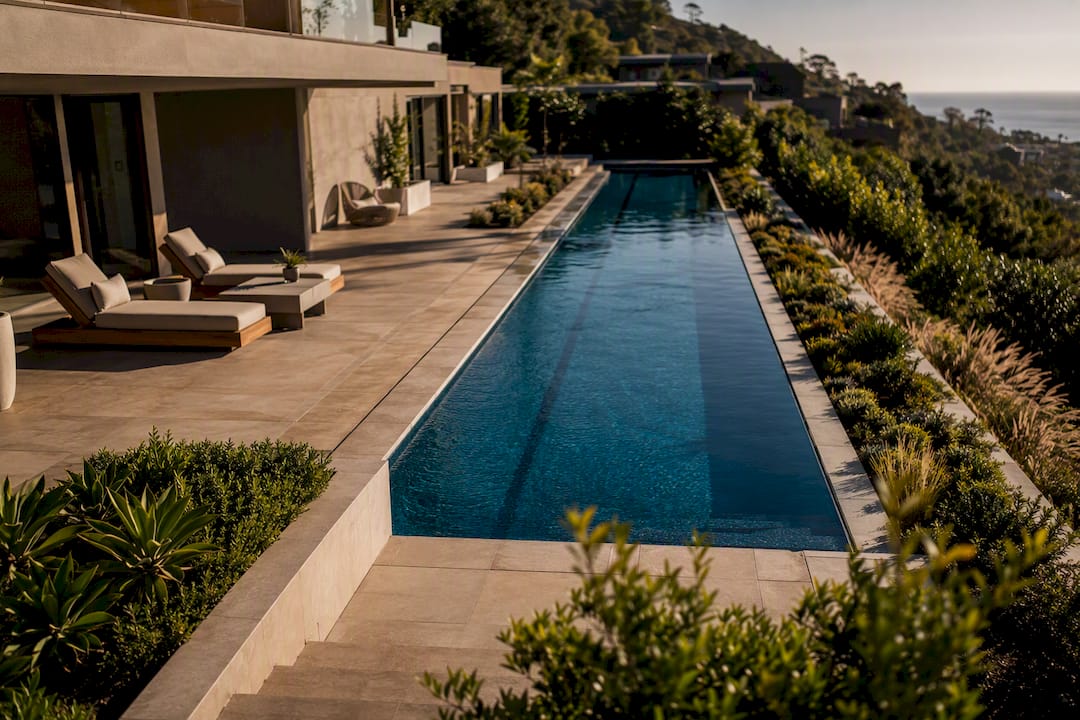
Rectangles and precise angles have largely replaced the lagoon-style freeform pools that dominated the last two decades. Forbes reports that luxury design in 2026 treats the pool as an architectural extension of the home rather than a standalone backyard feature. That means matching sightlines, matching materials, and matching the roofline's geometry, not dropping a curved shape into a rectangular yard.
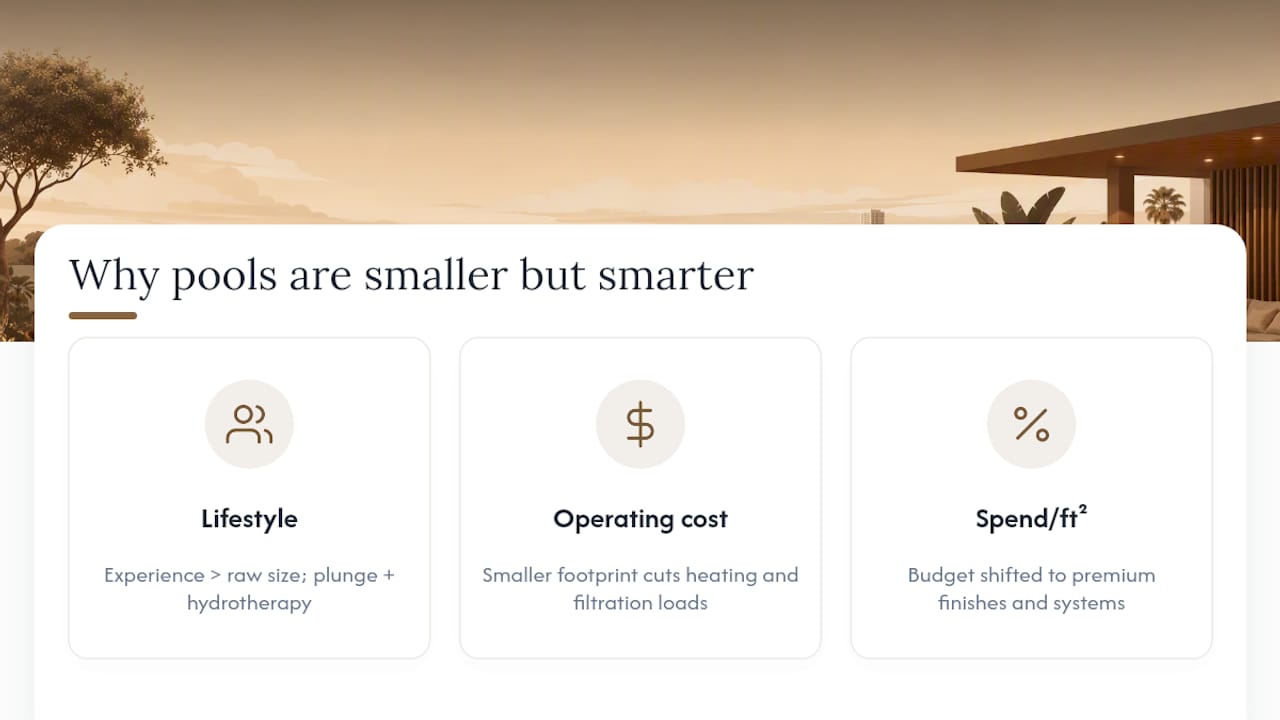
Three forces are driving the shrink. First, lifestyle experience now outranks raw size. Homeowners want a plunge pool with a chiller and a hydrotherapy bench more than a 40-foot lap lane they use twice a summer. Second, smaller footprints reduce heating and filtration loads, which lowers ongoing operating cost even as finish quality goes up. Third, spend per square foot has risen sharply. Money that once went toward decking an oversized pool now goes toward a stainless steel vessel, a glass tile waterline, or a nanobubble system, all packed into a tighter shape.
None of this means large pools are gone. A property with genuine entertaining demand, a swim-fitness routine, or a multigenerational household still justifies scale. The trend is toward intentional scale rather than default scale. A well-designed 30 by 15 foot pool with an integrated spa, a sun ledge, and a linear fire feature along one edge can deliver more usable luxury than a 50 foot freeform pool with a plain plaster finish. The goal is to size the water to the way the family actually lives outside, then commit the rest of the budget to how that water looks and feels.
What Finishes and Materials Define 2026 Pools?
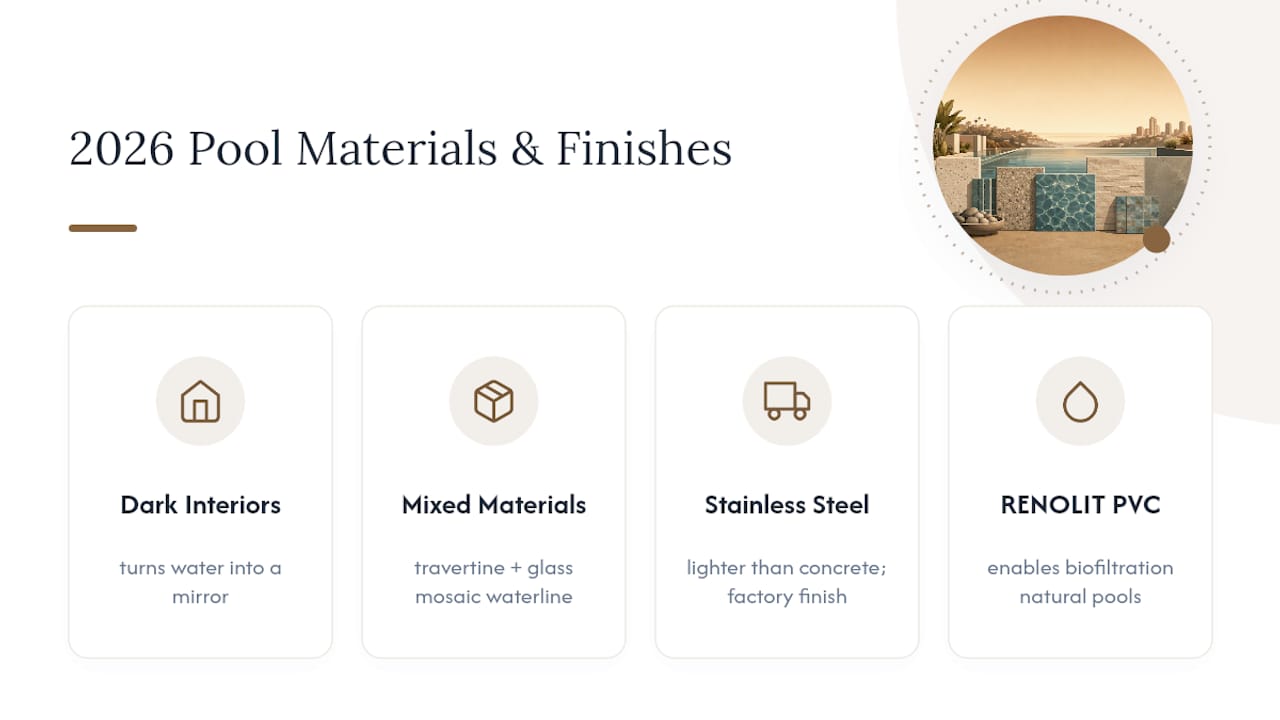
Dark interior finishes have taken over from the pale blue plaster that dominated for decades. Forbes' 2026 design coverage points to deep blues, charcoals, and graphite tones as the defining palette shift, and the reason is optical: a dark shell turns the water surface into a mirror that reflects the sky, the landscape lighting, and the architecture around it. A pale plaster pool reads as a feature. A charcoal pool reads as part of the yard's design language.
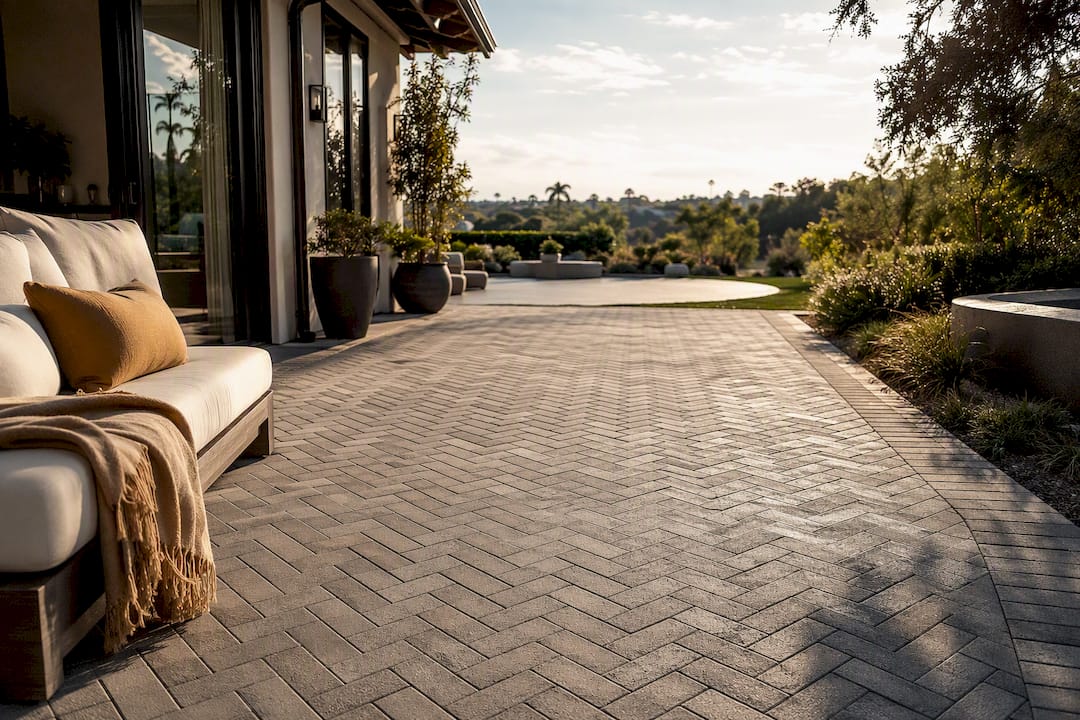
Mixed-material palettes have become the norm rather than the exception. Travertine coping paired with a glass mosaic waterline, or natural stone decking against a matte dark interior, gives a pool visual depth that a single material cannot. Glass tile in particular holds color and light differently than ceramic, which is why it shows up so often on waterlines and raised spa walls in higher-end builds. The tradeoff is installation precision. Glass mosaic requires tighter substrate tolerances and more careful grout work than standard tile, so it rewards a crew that has done it before and penalizes one that hasn't.
Two structural options are reshaping what "premium" even means below the waterline. Stainless steel pool vessels are showing up in elevated, cantilevered, and rooftop installations because a steel shell weighs far less than a comparable concrete structure while still delivering a precise, factory-finished surface with a long service life. And for homeowners drawn to a more natural water aesthetic, RENOLIT's reinforced PVC membrane has opened the door to biofiltration-based natural pools that support plant life and reduce dependence on biocide sanitizers, a build type that was largely a niche experiment until this membrane technology matured.
How Are Wellness Features Changing Small Pools?
Compact luxury means a pool under 400 square feet delivering the same restorative function as a full resort spa, just concentrated. This is where 2026's smaller footprints earn their "smarter" label. Forbes' design commentary on the category notes that the shift toward lifestyle experience features, rather than simple size increases, is now driving how homeowners spend their pool budget.
The features showing up most often in these compact builds include:
- Plunge and cold plunge pools, often 6 to 10 feet long, dedicated to recovery rather than swimming.
- Sun and tanning ledges, shallow shelves at the pool's edge built for loungers half-submerged in water.
- Hydrotherapy and massage jets, integrated into a raised spa or bench seating within the main pool.
- Integrated spas with separate temperature zones, allowing year-round use even when the main pool sits unheated.
Siting these features correctly in a constrained yard means thinking in zones rather than one continuous shape. A cold plunge tucked near a covered patio gets used daily; one stranded at the far end of the yard gets used twice a year. Pro Tip: Place the cold plunge or spa closest to the home's primary indoor-outdoor threshold. Proximity drives daily use far more than size does.
Prioritize based on how the household actually lives outside. A wellness-first household should anchor the design around the plunge and spa and treat the swimming area as secondary. An entertaining-first household should keep sightlines open and prioritize a sun ledge that doubles as lounge seating. A fitness-first household should preserve at least one straight swim lane, even if it means a smaller spa.
What Technology Now Comes Standard on Luxury Pools?
Nanobubble sanitization has moved from experimental to expected on higher-end builds. The technology infuses water with microscopic oxygen bubbles that improve clarity and reduce the volume of traditional sanitizing chemicals needed to keep water balanced, and trade reporting from Master Pools Guild names it among the leading water-care innovations for 2026. For homeowners tired of the smell and upkeep of heavy chlorine use, it is one of the more meaningful shifts in the category this year, not just a marketing feature.
Smart automation has quietly become baseline rather than optional. App-based controls, scheduled circulation cycles, and variable-speed pumps now show up on nearly every high-end build, largely because variable-speed pumps cut electrical draw substantially compared to older single-speed motors while giving homeowners remote control over heating, filtration, and water features from a phone.
Lighting has become the most visible expression of "pool as art." Programmable LED systems now let a single pool shift from a bright turquoise for a daytime pool party to a deep amber glow for an evening dinner party, with underwater fixtures and fiber-optic accents built directly into steps, benches, and water features. A well-lit pool at night does more for a property's evening atmosphere than almost any other single feature, because it is the one design element that performs after the sun goes down.
Which Sustainability Choices Actually Lower Long-Term Cost?
Variable-speed pumps, solar heating, and insulated pool covers deliver the biggest and most measurable reductions in ongoing operating cost among 2026's sustainability-focused upgrades. Covers alone cut evaporation and heat loss dramatically overnight, which matters most for heated spas and plunge pools that run temperature year-round. Solar heating, paired with a traditional heater as backup, extends swim season without the electric bill spike of running a gas or electric heater continuously.
Membrane systems present a real tradeoff against traditional masonry construction. A reinforced PVC membrane pool, like those built with RENOLIT's technology, supports a biofiltration-based, largely chemical-free water system, which appeals to homeowners chasing a more natural aesthetic and lower long-term chemical spend. Traditional plaster or pebble finishes over concrete remain more durable against structural movement and easier to repair locally if damaged, which matters in San Diego's clay-heavy soils.
Premium finish choices carry their own maintenance rhythm. Dark interiors show mineral scale and debris more visibly than light plaster, so they call for slightly more frequent brushing and water balancing. Glass tile resists staining better than ceramic but costs more to repair if a section cracks. Stainless steel vessels require essentially no resurfacing over their service life, which shifts the maintenance conversation from "when do we replaster" to "when do we service the equipment."
Which Pool Trends Hold Long-Term Value?
Architectural integration, premium surfacing, and efficient equipment hold value longest because they age with the house rather than against it. A pool designed as an extension of the home's own lines rarely looks dated a decade later, while a heavily ornamented freeform shape with waterfalls, faux rock, and grotto features tends to read as a specific era rather than a timeless investment. Purely decorative water features that consume energy without adding usable function are the first thing resale-minded buyers question.
Project shape tends to fall into two bands. Focused premium upgrades, such as a resurfacing project, a new water feature, or a lighting overhaul, typically run in the $25,000 range. Full custom pool and outdoor living transformations, combining the pool with an outdoor kitchen, pavers, and fire features into one cohesive environment, run from roughly $80,000 up to $300,000 or more depending on scope and materials. Reviewing typical pool installation cost ranges for California projects before finalizing scope helps set realistic expectations early.
Watch for contract checkpoints before signing: confirm material specifications in writing, verify who handles permitting, and check whether equipment placement has been planned around future maintenance access. Poor upfront equipment placement is one of the most common causes of costly rework mid-project.
Why Design-Build Delivery Matters for These Trends
Executing 2026's trend list well, dark reflective finishes, stainless steel vessels, nanobubble systems, wellness zones packed into a small footprint take coordination that a fragmented process struggles to deliver. Modern Yardz has built more than 2,900 projects under California Contractor License #1082881, and the pattern holds across nearly every one: when design and construction sit under one team, the finished pool matches the 3D rendering the homeowner approved, because there is no handoff where details get lost.
That matters more in 2026 than in past years, precisely because the finishes and technology have gotten more specific. A stainless steel vessel, a glass tile waterline, and a nanobubble system all need to be planned together from day one, not bolted on after a shell is already poured. One point of contact from first consultation through final walkthrough is what keeps that coordination intact.
— Thomas Jackson
Bring These 2026 Pool Trends to Your Own Backyard
Modern Yardz designs and builds custom pools and spas as complete architectural investments, not catalog installations, which is the real distinction between a builder who pours a shape and a design-build firm that engineers a resort environment around your home. Every project starts with 2D plans and photo-realistic 3D renderings so you see the dark interior finish, the stainless steel vessel, or the nanobubble system rendered against your actual property before construction begins. One team manages the entire process, from initial consultation through material procurement to final walkthrough, with zero subcontractor handoffs to lose details along the way.
If you're weighing a compact-luxury plunge pool, a full geometric lap pool, or a combined pool and outdoor kitchen transformation, explore the custom pool and spa design-build process Modern Yardz uses across La Jolla, Rancho Santa Fe, Del Mar, Coronado, and Carmel Valley. Request a free consultation to see your 2026 pool concept rendered in 3D before a single shovel touches your yard.
Sources
- Luxury Pool Design Trends To Elevate Your Backyard Entertaining
- Top Swimming Pool Trends for 2026
- RENOLIT Introduces Reinforced PVC Membrane for Natural Swimming Pools
FAQ
What Are the Must-Haves for a Pool in 2026?
Variable-speed pumps, app-based smart controls, and at least one wellness feature such as a sun ledge or integrated spa are now considered baseline on a luxury build, alongside a finish and shape that match the home's own architecture.
What Are the Most Popular Pool Interior Colors in 2026?
Deep blues, charcoal, and graphite tones lead the category, replacing the pale plaster finishes that dominated for decades, because dark interiors turn the water surface into a reflective, mirror-like element.
Will a Pool Increase the Value of Your House in 2026?
A well-integrated pool with durable, premium finishes tends to hold and support property value better than an oversized or heavily ornamented one, since architectural cohesion and efficient systems age well while decorative excess dates quickly.
What Are the Current Pool Design Trends?
The leading trends are geometric, architecturally integrated shapes, dark reflective interiors, compact-luxury wellness features, nanobubble sanitization, mixed-material surfacing, and efficient equipment like solar heating and variable-speed pumps.
Is a Stainless Steel Pool Better Than a Concrete Pool?
Stainless steel vessels weigh significantly less than concrete shells, which makes them well suited to elevated or rooftop installations, while concrete remains the more common choice for ground-level custom shapes and easier local repairs.
Recommended
Start Your Free Design Consultation
Tell us about your project and we'll be in touch within 24 hours. No pressure, no obligation.
Ready to design your dream yard?
Tell us about your project. We'll send back a real plan, not a templated quote.
Book My Free Consultation→