3 and 4 Foot Pool Setbacks in San Diego: Permits, Overlays, Fixes
Learn San Diego's 3 and 4 foot pool setback rules, overlay and easement traps, the buried equipment exemption, and design build fixes that prevent rechecks.
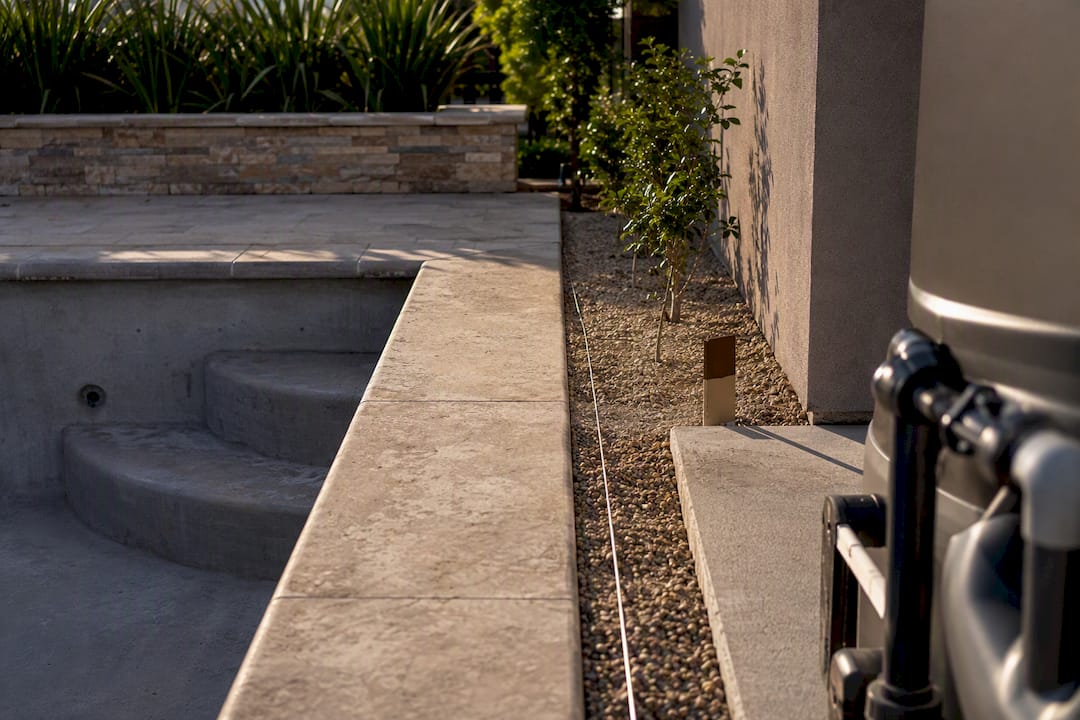
A San Diego pool setback of at least 3 feet from the property line applies to any pool that projects 3 feet or less above grade, while pools rising higher than that need a minimum 4-foot rear yard, with front and side yards set by the base zone. Before you sketch a single line, confirm your base zone and any overlay through the Development Services Department, then schedule a plan check or bring in a licensed professional.
TL;DR: - Pools over 3 feet high must have at least a 4-foot rear yard setback, but front and side setbacks vary depending on the zone designation. - Equipment mounted above grade needs a 4-foot clearance from property lines, while buried equipment with a permanent cover is exempt from setbacks. - Confirm your specific zone and check recorded easements before designing to avoid costly redesigns and delays. - All in-ground pools require a building permit, with prefabricated above-ground pools under 5,000 gallons generally exempt. - Using setbacks for architectural features like seating walls or planters can turn a regulation into a design advantage on tight lots.
Table of Contents
- San Diego Pool Setback Requirements Explained
- How Far Should Pool Equipment Sit From the Property Line?
- What Permits Do You Need to Build a Pool in San Diego?
- Overlay Zones, Easements, and Other Common Blockers
- Design-Build Solutions for Tight or Restricted Lots
- Your Pre-Submittal Checklist
- Setbacks as a Design Opportunity, Not Just a Rule
- Build Your Pool Right the First Time
- Sources
- FAQ
San Diego Pool Setback Requirements Explained
The San Diego Municipal Code sets a clean baseline, and it's worth quoting closely because contractors and homeowners alike misread it constantly. Pools that project 3 feet or less above grade need a minimum 3-foot setback from the front, side, and rear property lines. Once a pool wall or raised deck climbs higher than 3 feet above grade, the rear yard requirement increases to a larger minimum, according to the City of San Diego's private swimming pool information sheet.
Front and side setbacks work differently. They aren't fixed at 3 feet across the board. Instead, they reference the base zone table for your specific lot, which means an RS-1-7 lot in Rancho Santa Fe-adjacent neighborhoods can carry a different front setback than an RX zone parcel in Carmel Valley.
Here's how the zone designations typically affect your buildable envelope:
- RS (Residential Single Unit) zones often carry larger front setbacks, sometimes 15 to 20 feet, depending on the specific subzone.
- RE (Residential Estate) zones common in Rancho Santa Fe and similar large-lot areas frequently require wider side yards to preserve estate character.
- RX zones blend agricultural and residential use standards, which can shift both front and rear requirements.
- RM and RT zones (multi-unit and residential-townhouse) generally have tighter setbacks, relevant for higher-density coastal parcels in Del Mar or Coronado.
Lot shape matters too. Irregular or narrow lots sometimes qualify for setback averaging or minor exceptions, but those require a specific application, not an assumption. The zone tables themselves live in the Municipal Code's residential base zone chapters, and cross-referencing your parcel's exact zoning designation with those tables is the only reliable way to know your true number before design begins.
How Far Should Pool Equipment Sit From the Property Line?
Pool equipment plays by a different rulebook than the pool shell itself. Pumps, heaters, and filters mounted above grade generally need a 4-foot minimum clearance from side and rear property lines under the setback provisions governing accessory equipment. That clearance exists for noise buffering, service access, and fire code separation, not just aesthetics.
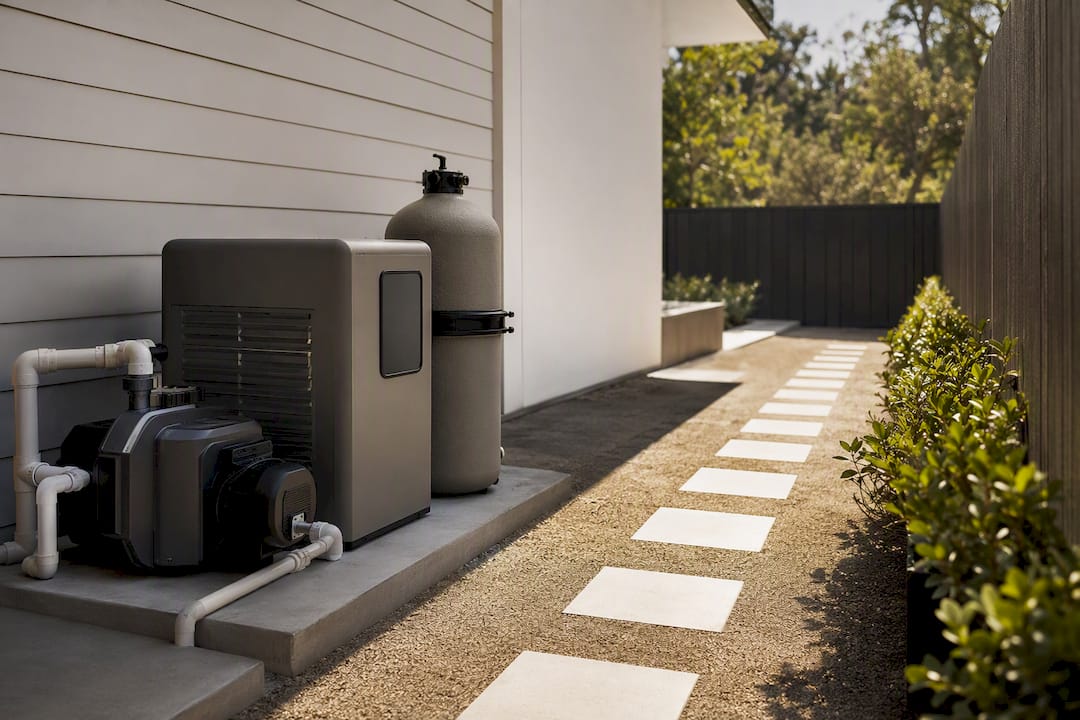
The buried-equipment exemption is the detail most homeowners never hear about: equipment installed below grade with a permanent protective covering is exempt from the standard yard setback requirements entirely. That single provision opens up design options for tight La Jolla and Coronado lots where every square foot along the property edge matters.
Barrier requirements run parallel to setback rules and cannot be treated as an afterthought:
- Pool fences and barriers must reach a minimum 60-inch height, measured from the outside grade.
- Maximum clearance beneath the barrier and any horizontal member spacing follows strict limits to prevent a child from climbing through or under.
- Gates must be self-closing and self-latching, with the latch release positioned high enough to prevent easy access from outside.
Raised spas, elevated decks, and sheer-descent walls often qualify as structures in their own right, which can trigger the taller 4-foot rear setback even when the pool itself sits low. Confirm how your specific feature is classified before finalizing placement.
What Permits Do You Need to Build a Pool in San Diego?
Every in-ground swimming pool in San Diego requires a building permit, no exceptions. Prefabricated above-ground pools holding 5,000 gallons or less typically don't, according to City of San Diego permit guidance, but any custom in-ground design, spa combination, or raised feature crosses into full permit territory immediately.
A complete submittal for a custom pool generally includes:
- A stamped site plan showing exact setback dimensions to every property line, prepared by a licensed architect or engineer.
- Engineered grading and drainage plans that demonstrate how surface water moves around the new structure.
- Equipment location diagrams identifying pumps, heaters, and filtration hardware, with clearances noted.
- Barrier and fencing details confirming height, latch placement, and gate specifications.
- Any electrical or gas trade plans tied to heaters, lighting, or automated equipment.
The Development Services Department handles permits for properties within city limits; county-jurisdiction parcels outside city boundaries route through a separate process entirely, so confirm jurisdiction before you submit anything. For complex lots, particularly sloped sites in La Jolla or Rancho Santa Fe, a preliminary review or pre-application meeting with DSD staff catches conflicts before they cost you a full re-check cycle.
Overlay Zones, Easements, and Other Common Blockers
Coastal Overlay Zone properties, common across Del Mar, La Jolla, and Coronado, often trigger a separate Coastal Development Permit on top of the standard building permit. That review is discretionary, meaning approval isn't guaranteed on the same timeline as a standard permit, according to the San Diego Municipal Code's overlay zone provisions.
Recorded utility easements are the quiet project killers. A 10-foot easement along your rear property line doesn't just limit setback, it can eliminate an entire section of otherwise buildable yard, regardless of what the zone table allows.
Watch for these additional constraints before committing to a layout:
- Steep slopes that trigger geotechnical review and soils reports.
- Historic overlay designations that restrict visible structural changes.
- Right-of-way dedications that reduce your effective lot depth.
Pro Tip: Pull your property's recorded easement map from the county recorder before you finalize any pool layout. Discovering a drainage easement after design is complete is the single most common cause of last-minute redesigns.
Design-Build Solutions for Tight or Restricted Lots
Meeting setback code and delivering a resort-caliber pool aren't competing goals. They're solved together, with the right sequencing.
Modern Yardz has spent years working within San Diego's setback and equipment clearance rules across more than 2,900 completed projects, and a handful of tactics show up repeatedly on tight La Jolla, Coronado, and Carmel Valley lots:
- Recess equipment below grade with a durable enclosure to claim the buried-equipment exemption and reclaim usable side yard.
- Build seating walls and planters directly along the setback line, turning a required buffer into an architectural feature rather than wasted space.
- Specify compact, high-efficiency mechanical packages that fit inside a smaller enclosure without sacrificing performance.
- Engineer grading and drainage plans up front so reviewers see a resolved water-management strategy on the first submittal.
A single stamped set of plans, backed by 3D renderings, tells a plan reviewer exactly how a project resolves setback and drainage questions before they're asked. That's the difference between one review cycle and three.
Holding California Contractor License #1082881, Modern Yardz manages design, engineering, permitting, and construction under one team, which means no subcontractor handoffs and no conflicting drawings between the architect and the builder.
Your Pre-Submittal Checklist
Before your plans reach a reviewer's desk, work through this sequence:
- Confirm your base zone designation and check for any overlay (coastal, historic, or floodplain).
- Measure and document actual distances from proposed pool edges to every property line.
- Pull recorded easement maps and mark them on your site plan.
- Choose below-grade equipment placement wherever the lot allows it.
- Commission stamped site and civil plans from a licensed architect or engineer.
- Schedule a preliminary review with DSD before formal submittal.
Standard plan-review cycles for custom pools typically run several weeks per pass, and the most common cause of resubmittal is a setback dimension that doesn't match the surveyed property line. If your lot touches a coastal overlay, a steep slope, or an easement, hiring a licensed professional before you draw anything saves far more time than it costs.
Setbacks as a Design Opportunity, Not Just a Rule
The best pools on tight San Diego lots aren't the ones that fight the setback line. They're the ones that use it, turning a required 4-foot buffer into a seating wall or a planting screen that adds privacy nobody expected. Early coordination between design and engineering avoids the rework that eats months. An integrated team simply approves faster and builds cleaner than a patchwork of separate contractors ever will.
— Thomas Jackson
Build Your Pool Right the First Time
Getting a custom pool through San Diego's plan-review process cleanly takes more than knowing the setback numbers. It takes stamped plans, engineered drainage, and a team that has actually navigated Coastal Development Permits and easement conflicts across thousands of San Diego lots. Modern Yardz manages that entire process, design, permitting, and construction, under one contract and one point of contact, so your project moves through Development Services without the re-check cycles that stall pools designed by disconnected teams.
Every Custom Pools & Spas project starts with 3D renderings you approve before construction begins, backed by California Contractor License #1082881 and a 5.0-star rating across 2,900+ completed projects. If you're ready to see what your lot can actually support, book a free consultation and get a clear read on your setback envelope before you spend a dollar on design.
FAQ
How close to a property line can you build a pool in San Diego?
A pool projecting 3 feet or less above grade needs at least a 3-foot setback from the property line; taller pools need a 4-foot minimum rear setback, per City of San Diego DSD guidance.
What are the current pool setback regulations in the City of San Diego?
The baseline is 3 feet for pools 3 feet or less above grade and 4 feet at the rear for taller pools, but front and side yards ultimately depend on your base zone table, so confirm your specific zoning designation with DSD before finalizing a layout.
What are the building setback requirements in San Diego for pool equipment?
Above-grade pumps, heaters, and filters generally need a 4-foot clearance from side and rear property lines, though equipment buried below grade with a permanent cover is exempt from that requirement.
How far does a pool need to be from a house in California?
California building code doesn't set a statewide pool-to-house distance; San Diego's local setback rules govern distance to property lines rather than to the residence itself, so structural and drainage clearances near the house are typically addressed through the engineered site plan.
Does every in-ground pool in San Diego require a permit?
Yes, all in-ground swimming pools require a building permit, while prefabricated above-ground pools of 5,000 gallons or less typically do not, according to DSD's permit-requirement guidance.
Recommended
Start Your Free Design Consultation
Tell us about your project and we'll be in touch within 24 hours. No pressure, no obligation.
Ready to design your dream yard?
Tell us about your project. We'll send back a real plan, not a templated quote.
Book My Free Consultation→