San Diego Homeowners: 25 Foot Setbacks and Permits for Fire Pits
Clear, code first guidance for San Diego homeowners: 25 foot setbacks, permit steps, inspections, and smoke rules to avoid fines and stop work orders.
Backyard fire pits are legal in San Diego, but only within specific limits. Recreational fires need at least 25 feet of clearance from any structure and cannot exceed 3 feet in diameter or 2 feet in height. Portable outdoor fireplaces get a shorter 15 foot setback. Whether you need a permit depends entirely on construction type and fuel source, and masonry or gas-line work almost always requires one.
TL;DR: - Fire pits may require permits if built-in or gas-fed, especially for masonry or electrical work, with approval needed before construction begins. - Setback distances are 25 feet for open recreational fires and 15 feet for portable fireplaces, with fuel area size limited to 3 feet in diameter and 2 feet in height. - Weather and fire safety conditions, such as Red-Flag Warnings, can suspend fire use citywide, regardless of the fire pit's location or type. - Strict inspection and compliance procedures are necessary for permanent features, including gas and electrical permits, with inspections occurring at multiple construction stages. - Smoke and emissions regulations favor gas fire features, and non-compliance with code or violations can lead to fines, fines, stop-work orders, and liability for wildfire suppression costs.
Table of Contents
- Fire Pit Code San Diego: Your Pre-Build Checklist
- What Are San Diego's Setback and Size Rules for Fire Pits?
- Do I Need a Permit for a Fire Pit in San Diego?
- When Is Fire Pit Use Restricted in San Diego's WUI Zones?
- What Are the Day-of-Use Safety Rules for Fire Pits?
- How Do I Apply for a Fire Pit Permit in San Diego?
- What Happens If You Violate San Diego's Fire Pit Code?
- Permanent vs. Portable Fire Pits: How Code Requirements Differ
- Local Zoning and HOA Rules That Affect Fire Pit Placement
- What Inspections Are Required for Installed Fire Pits?
- Are There Smoke and Emissions Rules for Fire Pits in San Diego?
- Why the "Just Buy a Fire Pit" Advice Misses the Point
- Build a Compliant Fire Feature With Modern Yardz
- Sources
Fire Pit Code San Diego: Your Pre-Build Checklist
Before you buy materials or call a contractor, run through this list. It covers the fire pit code San Diego homeowners run into most often, and skipping any item here is the fastest way to end up with a stop-work order.
- Confirm setbacks: 25 feet from structures for open recreational fires, 15 feet for portable outdoor fireplaces in approved containers.
- Verify your fuel area stays within 3 feet in diameter and 2 feet in height.
- Determine if your project needs a Building, plumbing, or electrical permit before construction starts.
- Check for a Red-Flag Warning or Fire Weather Watch on the day you plan to burn.
- Confirm beach-specific rules if you're building anywhere near the coast.
- Keep an extinguisher, hose, or bucket of water within reach at all times.
- Never leave a lit fire pit unattended, even for a few minutes.
Pre-manufactured gas units feel like the simple option, but many still require gas line or electrical permits once they're plumbed into your home's utilities. Don't assume "portable" means "permit-free."
What Are San Diego's Setback and Size Rules for Fire Pits?
The City of San Diego's recreational fires policy defines a recreational fire as an open flame used for pleasure, warmth, or cooking rather than debris disposal. The fuel area cannot exceed 3 feet in diameter and 2 feet in height, and the fire must sit at least 25 feet from any structure, fence line, or combustible material.
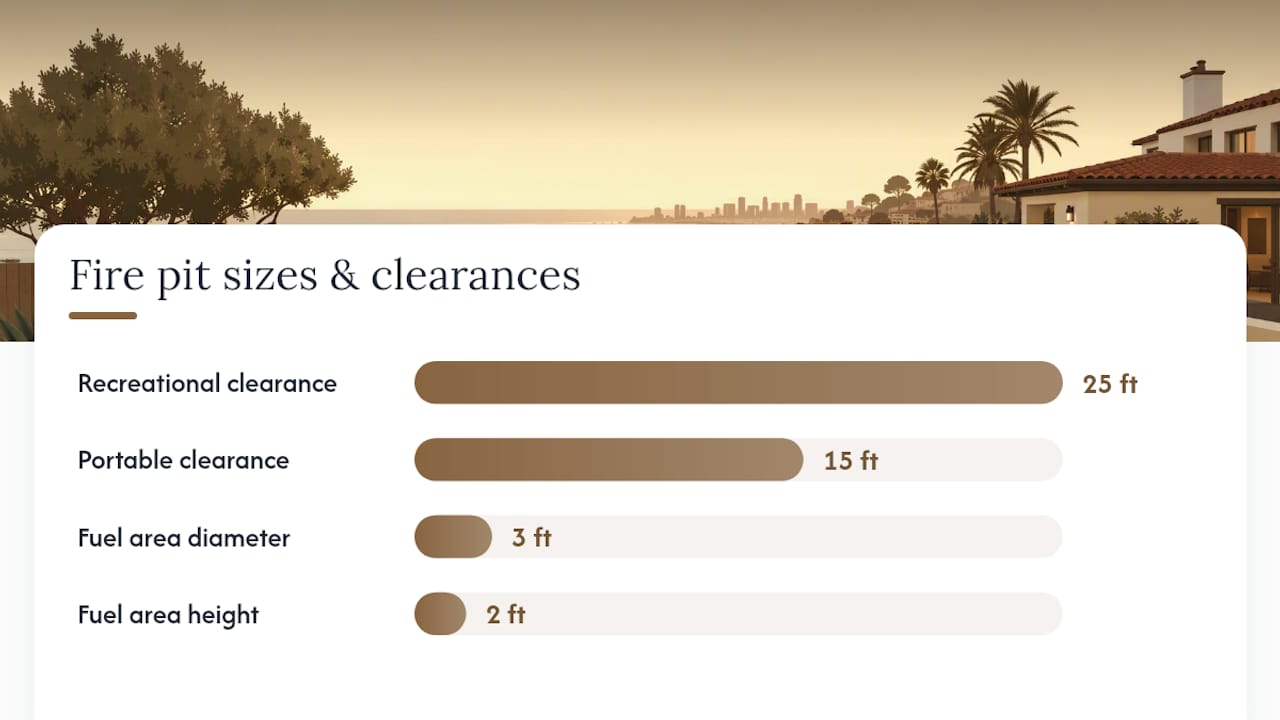
Portable outdoor fireplaces, the enclosed metal or ceramic units sold at most patio retailers, get a break on distance. Because they're contained in an approved vessel, they only need 15 feet of clearance from structures. Manufacturer instructions still govern how they're used, so a unit rated for tabletop placement can't be treated like a full-size fire pit.
Solid-fuel warming fires in some jurisdictions require a spark-arrestor screen with mesh no larger than a quarter inch, a detail worth confirming with your local fire district before your first burn.
Fuel matters as much as geometry. Clean, dry firewood, charcoal, and natural gas are permitted. Trash, leaves, pallets, treated or painted lumber, and anything releasing dense smoke or toxic fumes are prohibited outright under San Diego Municipal Code.
Do I Need a Permit for a Fire Pit in San Diego?
It depends on what you're building. A simple portable unit set on an existing paver patio typically needs no permit at all. A permanent, built-in fire feature is a different conversation entirely.
Masonry fireplaces and custom-built fire features require a Building or Combination Permit, full stop. Some gas-burning decorative fire pits skip the Building Permit requirement but still need plumbing or electrical permits for the gas line or wiring that feeds them. Trenching a gas line across your yard triggers inspection requirements regardless of how modest the fire pit itself looks.
Electrical work, whether it's a switch for an ignition system or lighting integrated into a seating wall, needs its own permit. Mechanical components tied to a larger outdoor kitchen or fire feature build follow the same logic. One detail catches homeowners off guard: electrical, plumbing, and mechanical permits tied to a Building Permit all expire concurrently with it. If your final inspection isn't approved before that date, work legally has to stop.
When Is Fire Pit Use Restricted in San Diego's WUI Zones?
San Diego adopted the 2025 California Fire Code with local amendments, and that adoption forms the backbone of the current San Diego Fire Code. Much of San Diego County sits inside Wildland Urban Interface (WUI) or Very High Fire Hazard Severity Zones, and local fire protection districts are permitted to layer stricter rules on top of the baseline code.
The clearest trigger is weather, not geography. Under a National Weather Service Red-Flag Warning or Fire Weather Watch, recreational fires and portable fireplaces are suspended citywide, with narrow exceptions for certain maintained beach fire rings. Recent code updates closed a common loophole that let some homeowners assume portable units were exempt from these weather suspensions. They aren't.
Check your fire district's current status and the NWS forecast before every burn, not just the first one. Restrictions can change within hours during Santa Ana wind events.
What Are the Day-of-Use Safety Rules for Fire Pits?
Code compliance doesn't end once your fire pit is built. San Diego's municipal code requires an adult to attend any recreational fire or portable fireplace from ignition until it's completely extinguished, and extinguishing equipment has to be within reach the entire time.
- Keep a 4-A rated fire extinguisher, garden hose, or bucket of water and dirt immediately accessible.
- Never leave the fire, even to answer the door or check on dinner.
- Use a spark-arrestor screen with mesh no larger than a quarter inch for solid-fuel fires where required.
- Watch wind direction constantly. Embers travel farther than most homeowners expect.
- Keep the surrounding area clear of dry leaves, mulch, and low branches.
Pro Tip: Designate one adult as the "fire watcher" for the evening, not just a general assumption that someone's keeping an eye on it. A specific person with a specific job extinguishes fires faster than a group of distracted guests.
How Do I Apply for a Fire Pit Permit in San Diego?
Permanent fire features go through San Diego's Development Services Department, and the process is more straightforward than most homeowners expect once the paperwork is organized.
- Prepare a plot or site plan showing exact setbacks from structures, property lines, and combustible landscaping.
- Gather foundation details, manufacturer specifications for any gas insert, and a gas or electrical schematic if utilities are involved.
- Include a vicinity map and any HOA or architectural review approvals your property requires.
- Submit through the city's online permitting portal, referencing Information Bulletin 201 for fireplace-specific requirements.
- Schedule inspections for each permit type (building, gas, electrical) before your combined permit expiration date.
Inspectors will check that clearances match your submitted plans, that gas connections are pressure-tested, and that any electrical work meets code before signing off. Missing a scheduled inspection near your expiration date can force a full re-submittal, so build inspection windows into your timeline early.
What Happens If You Violate San Diego's Fire Pit Code?
San Diego treats fire code violations as misdemeanors, and each day a violation continues can count as a separate offense under municipal code. That's not a technicality worth testing.
If a negligently maintained or illegally sited fire pit sparks a wildfire, the homeowner can face suppression-cost recovery, meaning the city or county can bill you for the actual cost of putting the fire out. Add potential stop-work orders, mandatory correction notices, and fines on top of that, and the math never favors cutting corners on setbacks or permits.
Permanent vs. Portable Fire Pits: How Code Requirements Differ
The single biggest compliance question homeowners ask is whether a permanent fire feature or a portable unit is the easier path. The honest answer: portable is easier to install, but permanent is easier to make fully code-compliant for the long term.
A portable outdoor fireplace, purchased and placed on an existing patio, generally avoids Building Permit requirements and only needs 15 feet of clearance. But it's still subject to the same weather-based suspensions, the same attendance rules, and the same fuel restrictions as any other fire feature. Move it, and your setback obligations move with it.
A permanent, built-in fire pit or fireplace, whether stone masonry or a gas-fed architectural feature, requires a Building or Combination Permit and often plumbing or electrical permits depending on the fuel source. That upfront paperwork buys something valuable: a documented, inspected installation that's tied to your property's permit history. If you ever sell the home, a permitted fire feature shows up clean on a title search. An unpermitted one is a liability disclosure waiting to surface during escrow.
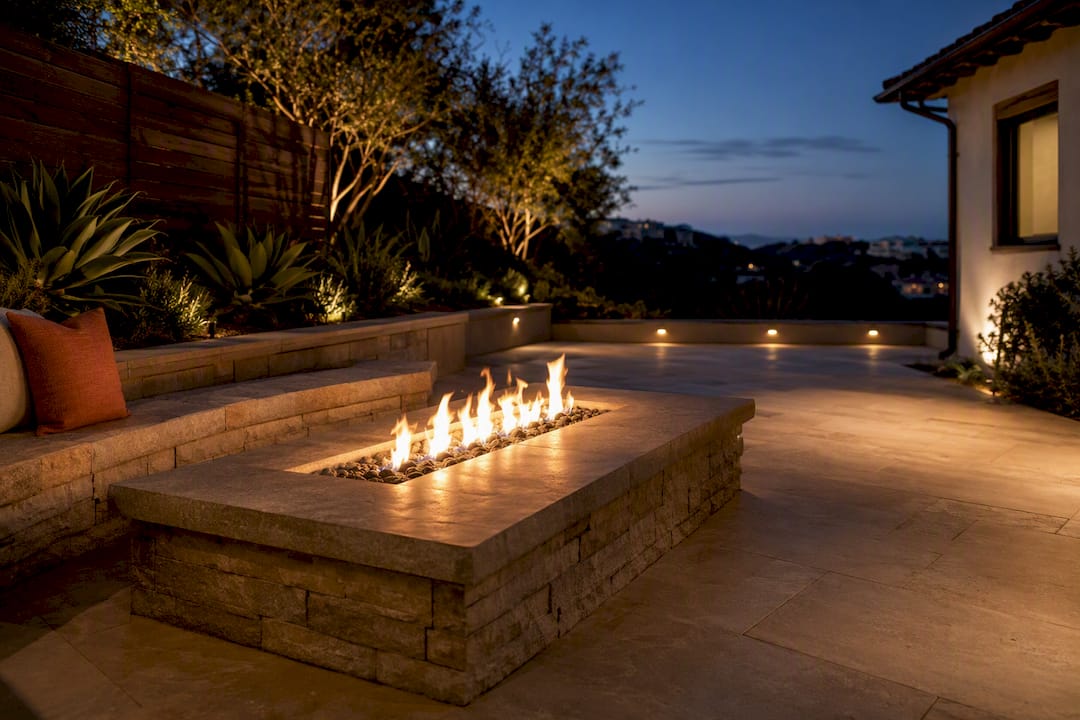
For luxury properties in neighborhoods like La Jolla or Rancho Santa Fe, where fire features often anchor an entire outdoor entertaining area, the permanent route also allows for integrated gas lines, ambient lighting, and seating walls designed as one architectural composition rather than a standalone appliance dropped onto a patio.
Local Zoning and HOA Rules That Affect Fire Pit Placement
City code sets the floor, not the ceiling. Your neighborhood's zoning designation and, if applicable, your homeowners association can impose additional restrictions that are just as enforceable as municipal fire code.
Many hillside and canyon-adjacent properties across San Diego County carry zoning overlays tied to fire hazard severity, which can mean tighter setbacks than the citywide 25-foot standard or outright restrictions on solid-fuel appliances. Properties in view corridors or slope-sensitive zones sometimes face additional review before any permanent structure, fire features included, gets approved.
HOAs add another layer entirely. Architectural review committees in planned communities across Carmel Valley and Del Mar frequently require design approval for anything visible from a neighboring lot or shared common area, and some associations restrict wood-burning fire pits altogether in favor of gas units to control smoke drift between properties. A few go further and dictate approved materials, flame height, or hours of use.
Before finalizing any fire feature design, pull your property's zoning designation from the county assessor's records and, separately, request your HOA's current architectural guidelines in writing. Verbal approval from a board member isn't documentation. A written approval letter is the only version that protects you if a placement dispute comes up later.
What Inspections Are Required for Installed Fire Pits?
Any fire feature tied to a Building, plumbing, or electrical permit triggers a formal inspection sequence, and skipping a step is one of the most common reasons luxury projects stall near the finish line.
Inspectors typically check the excavation and footing before concrete pours for masonry features, verify gas line pressure and connection integrity before the line is buried or concealed, and confirm electrical bonding and GFCI protection for any wired components. A final inspection reviews the completed feature against the approved plans, measuring actual setbacks against what was submitted and checking that spark-arrestor requirements, where applicable, are met.
Each inspection has to pass before you move to the next phase, and because associated permits expire concurrently with your Building Permit, a delayed inspection can put your entire project's paperwork at risk. Scheduling inspections promptly, rather than batching them at the end, keeps a fire feature build on track from groundbreaking to final walkthrough.
Are There Smoke and Emissions Rules for Fire Pits in San Diego?
Beyond fire code, San Diego's outdoor burning is shaped by regional air quality standards enforced through the San Diego Air Pollution Control District, which governs what can legally be burned and under what conditions across the county. Dense smoke, visible particulate drift onto neighboring properties, and burning of prohibited materials like treated lumber or trash all fall outside acceptable use regardless of whether your fire pit otherwise meets setback and size requirements.
This is one of the quieter reasons gas has become the preferred fuel choice for luxury fire features in recent years. Gas combustion produces negligible particulate output compared to wood burning, which sidesteps both neighbor complaints and the ember risk that drives many WUI restrictions in the first place. For properties in tightly spaced coastal neighborhoods where a wood fire's smoke has nowhere to go but a neighbor's patio, that difference matters practically, not just legally.
Homeowners planning wood-burning features should factor prevailing wind patterns and lot proximity into placement decisions early, since a technically compliant fire pit can still generate a neighbor dispute if smoke consistently drifts across a shared fence line.
Why the "Just Buy a Fire Pit" Advice Misses the Point
Most online guidance treats fire pit compliance as a shopping decision: buy the right size, keep it far enough from the house, done. That advice isn't wrong, exactly. It's just incomplete for anyone building a fire feature meant to last twenty years rather than get replaced every few seasons.
The conventional wisdom undersells how much permitting affects long-term value. A permitted, inspected fire feature is a documented asset. An unpermitted one, even a beautiful one, is a disclosure problem the moment you list your home. I'd argue the real decision point isn't "portable versus permanent." It's whether you're building something disposable or something architectural.
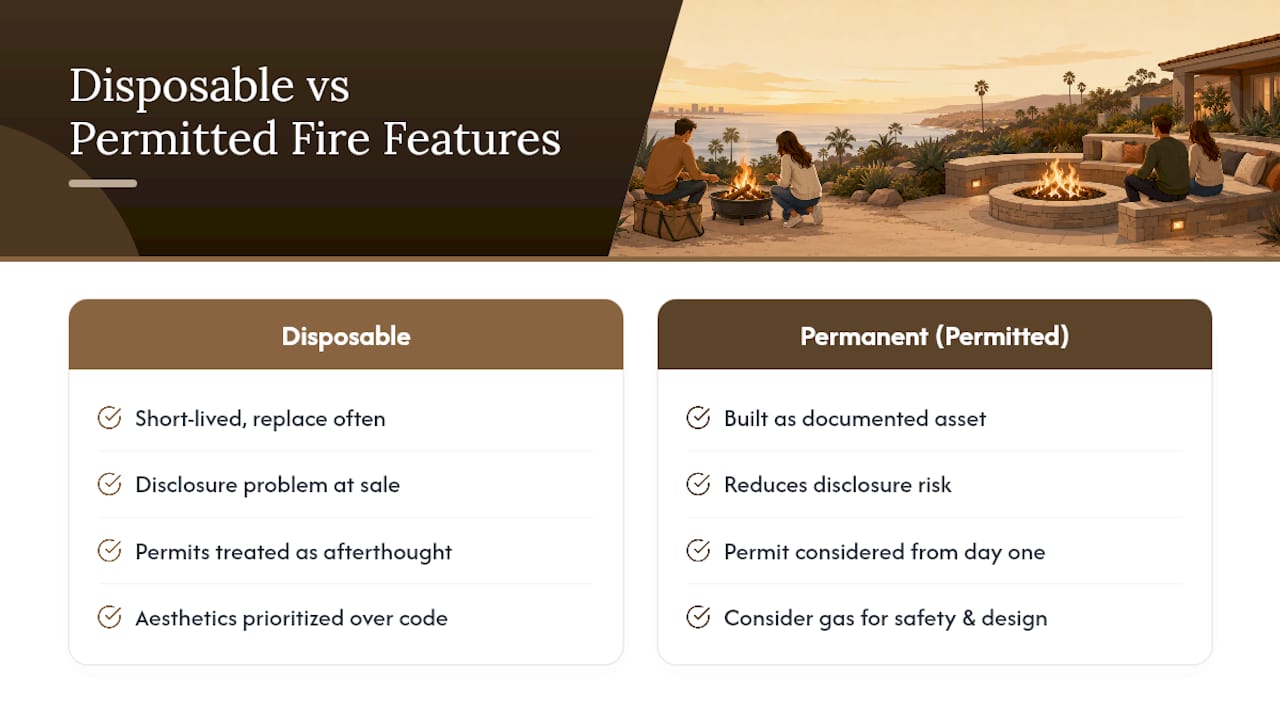
The other blind spot is fuel choice. Homeowners fixate on aesthetics first and code second, when gas features often solve both problems at once, reducing ember risk in WUI zones while giving you cleaner lines and no ash cleanup. If you're investing in a fire feature as the centerpiece of an outdoor room, treat the permit set and the fuel decision as design decisions, not paperwork to get through afterward.
Prioritize a documented compliance path from day one. Everything else, the finish, the surround, the seating, is easier to get right once that foundation is settled.
— Thomas Jackson
Build a Compliant Fire Feature With Modern Yardz
Modern Yardz is the alternative to piecing together a fire pit project through separate contractors, permit runners, and gas technicians. Since 2018, our design-build team has completed more than 2,900 projects across San Diego County under a single California Contractor License #1082881, with a perfect 5.0-star rating built on exactly this kind of code-first craftsmanship.
Every custom fire pit or luxury fire feature we design starts with 3D renderings you approve before construction, followed by permit drawings, gas and electrical coordination, and inspection scheduling, all managed by one team with zero subcontractor handoffs. You never chase separate permits or wonder who's responsible for what.
If you're planning a fire feature for a property in La Jolla, Rancho Santa Fe, Del Mar, Coronado, or Carmel Valley, view our portfolio of completed projects and schedule a free consultation to start your design.
Sources
- Recreational Fires | City of San Diego Official Website
- San Diego Municipal Code — Article 11: San Diego Fire Code
Recommended
Start Your Free Design Consultation
Tell us about your project and we'll be in touch within 24 hours. No pressure, no obligation.
Ready to design your dream yard?
Tell us about your project. We'll send back a real plan, not a templated quote.
Book My Free Consultation→