California Native Plants for San Diego Yards: 18 That Thrive
The California native plants that do best in San Diego yards are the ones from our own coastal sage scrub and chaparral: toyon, lemonade berry, ceanothus, manzanita, Cleveland sage, California buckwheat, deer grass, and a handful of perennials. Plant them in fall, water deeply for the first summer, then mostly let the rain do the work.
Key takeaways:
- San Diego's best native garden plants come from local coastal sage scrub and chaparral, so they are built for dry summers and winter rain.
- Fall is the right time to plant natives here; winter rain establishes roots before the first hot summer.
- Most natives need regular water only for their first one or two summers, then little or none.
- Outdoor watering is the biggest lever on your water bill, and native gardens can qualify for County of San Diego rebate bonuses.
- Keep woody natives out of the first 5 feet around the house if you are in a fire hazard zone.
California native plants for San Diego are the easiest way to get a garden that looks full in August without a thirsty lawn. They evolved with our long dry season, our winter rains, and our coastal fog, so they need far less water and fertilizer than imported ornamentals once they are established. At Modern Yardz, we design native and mixed-native landscapes across San Diego County, from coastal La Jolla lots to inland Escondido slopes.
This guide covers the 18 natives we reach for most, where each one works, when to plant, how to water, and how a native garden fits with fire-safe design and the county's rebate programs.
Why plant California natives in San Diego?
Because they are adapted to exactly the conditions your yard faces: hot, dry summers, mild wet winters, and soils that range from coastal sand to inland clay. Natives grow without summer irrigation in the wild, which is why they are so efficient in a garden.
Water is the biggest reason. According to the EPA's WaterSense program, outdoor water use accounts for nearly 30 percent of household water use nationally, and can be as high as 60 percent in hot, dry climates. In a San Diego yard, the lawn and thirsty shrubs are usually where that water goes.
Natives also feed local wildlife. Bees, hummingbirds, butterflies, and songbirds are adapted to these plants, and a native garden brings them in far more reliably than a lawn and a hedge of imported shrubs.
Which native shrubs work best for structure and privacy?
Toyon, lemonade berry, ceanothus, and manzanita are the backbone plants: evergreen, tough, and attractive year-round.
- Toyon (Heteromeles arbutifolia): A large evergreen shrub with white summer flowers and bright red winter berries. Works as a screen or small tree. Tolerates coast and inland.
- Lemonade berry (Rhus integrifolia): Dense, glossy, and salt-tolerant. One of the best native hedges for coastal yards from Del Mar to Point Loma.
- Ceanothus (California lilac): Blue spring flowers that bees love. Choose a garden-tolerant variety such as 'Ray Hartman' for a tall screen or 'Yankee Point' as a groundcover.
- Manzanita (Arctostaphylos): Sculptural red bark and small bell flowers. Needs good drainage; garden selections like 'Howard McMinn' are the most forgiving.
- Coffeeberry (Frangula californica): A neat, medium shrub that takes some shade and looks tidy in more formal designs.
Give these plants room. A toyon or ceanothus planted three feet from a wall will be cut back for the rest of its life; plant for the mature size and the garden needs almost no pruning.
Which natives give color and fragrance?
Native sages, buckwheats, and summer bloomers carry the color, and many of them perfume the whole yard.
- Cleveland sage (Salvia clevelandii): Purple flowers and one of the most fragrant plants in the state. Full sun, very drought tolerant.
- Hummingbird sage (Salvia spathacea): A low, shade-tolerant sage with magenta flowers that hummingbirds find quickly. Good under oaks.
- California buckwheat (Eriogonum fasciculatum): Clouds of white-to-pink flowers that age to rust; a top bee plant.
- St. Catherine's lace (Eriogonum giganteum): Large, silver, and architectural, with flat white flower heads.
- Bush sunflower (Encelia californica): Bright yellow daisies for coastal slopes and sunny banks.
- Sticky monkeyflower (Diplacus aurantiacus): Orange tubular flowers spring through summer; cut back lightly after bloom.
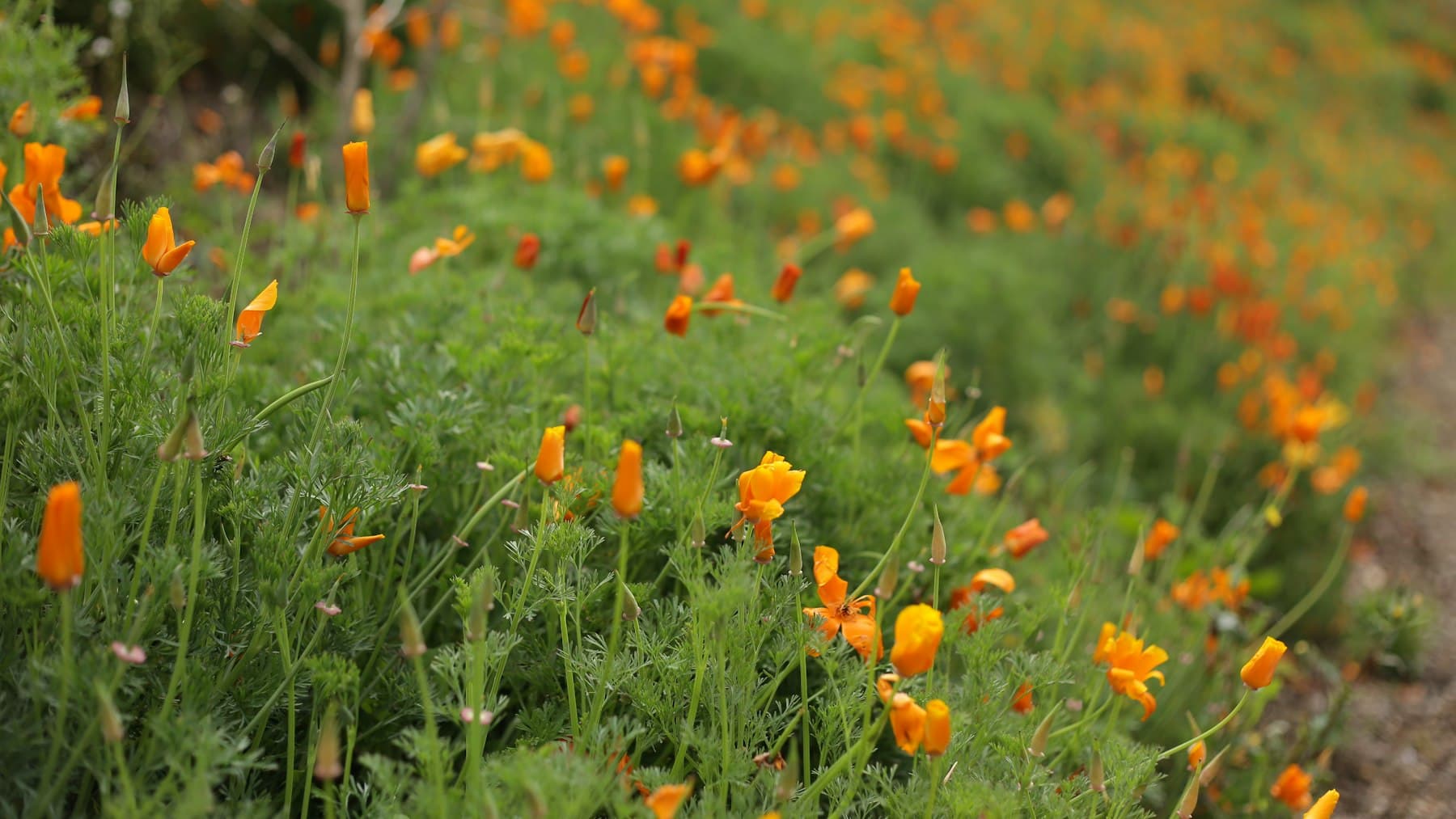
- California poppy (Eschscholzia californica): The state flower. Sow seed in fall for a spring show.
- Matilija poppy (Romneya coulteri): Huge white "fried egg" flowers on a big, spreading plant. Spectacular, but give it space; it runs.
Which natives work as grasses, groundcovers, and lawn alternatives?
Deer grass for structure, yarrow and low ceanothus for groundcover, and native sedges where you want a soft, walkable look.
- Deer grass (Muhlenbergia rigens): A fountain-shaped native bunchgrass that gives modern designs a clean, repeated form.
- Yarrow (Achillea millefolium): Can be mowed as a low lawn substitute in lightly used areas, or left to flower.
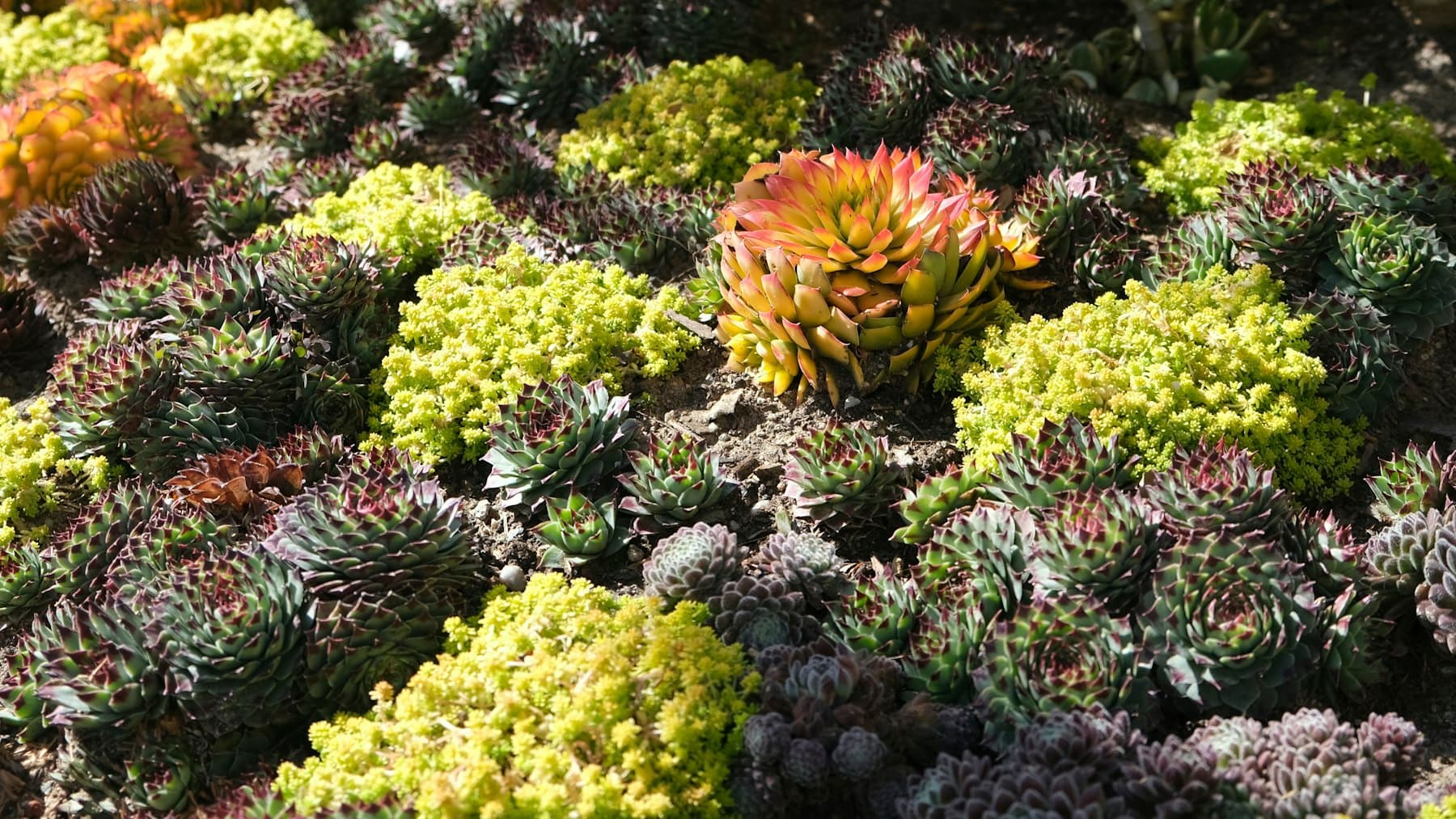
- Dudleya: Native succulents, especially good in rock gardens and on coastal bluffs. Never overwater them.
- Coast live oak (Quercus agrifolia): If you have room, the classic native shade tree. Do not irrigate close to the trunk in summer.
- Torrey pine (Pinus torreyana): Native only to the San Diego coast and Santa Rosa Island. A striking specimen for large coastal lots.
Pure native lawns are rare. If you need a surface kids and dogs can play on, consider a small area of artificial turf or a tough grass, framed by native beds.
Coastal vs inland: which natives go where?
Coastal yards get fog, salt, and mild temperatures; inland yards get heat and colder winter nights. Choose accordingly.
| Plant | Coast (La Jolla, Del Mar, Coronado) | Inland (Escondido, Poway, Rancho Santa Fe) |
|---|---|---|
| Lemonade berry | Excellent | Good with some water |
| Toyon | Excellent | Excellent |
| Ceanothus | Good, choose coastal varieties | Good, avoid overwatering |
| Manzanita | Good with drainage | Excellent |
| Cleveland sage | Good | Excellent |
| Bush sunflower | Excellent | Good |
| Dudleya | Excellent on slopes | Needs afternoon shade |
| Coast live oak | Good | Excellent |
Calscape, the California Native Plant Society's plant database, lets you search by your exact address to see which plants grow naturally near you. The San Diego chapter of CNPS also runs garden tours and plant sales that are worth attending before you shop.
When should you plant natives in San Diego?
Plant between October and early spring, ideally in fall. Natives grow roots in cool weather, and winter rain does most of the watering while those roots establish. A native planted in June has to survive its first summer with a tiny root system, which is why spring plantings fail more often.
How to plant for the best survival:
- Dig a hole no deeper than the root ball and about twice as wide.
- Fill the hole with water and let it drain before planting, especially in clay.
- Plant slightly high so the crown stays dry.
- Skip the fertilizer and rich amendments; most natives prefer lean soil.
- Mulch with a thin layer of gravel or shredded bark, kept away from stems.
How much water do native plants need?
Water deeply but infrequently for the first one to two summers, then taper off. A common schedule is a deep soak every week or two during the first summer, every two to four weeks the second summer, and only during long heat waves after that, depending on the plant and your soil.
Overwatering kills more natives than drought. Many chaparral plants, including manzanita, ceanothus, and dudleya, are prone to root rot if they are kept wet in warm weather. Drip irrigation on its own zone, separate from any lawn or thirsty plants, is the right setup.
Can a native garden earn a rebate in San Diego County?
Often, yes. The County of San Diego's Waterscape Rebate Program offers incentives in unincorporated areas for replacing lawn with water-wise landscaping, and the native plant application lists a bonus of $1 per square foot, up to $2,000, when the new planting is California native.
The details matter. The county requires at least three native plants per 100 square feet converted, verification of each species, and approval before you start work. Your lawn usually has to still be in place, even if it is brown, when you apply. Rules and rates change, so confirm the current terms before you remove anything.
Are native plants fire-safe?
Some are safer than others, and placement matters more than the plant list. Chaparral species like chamise and California sagebrush are oily and burn hot, so keep them away from structures. In fire hazard zones, the first 5 feet around the house should stay free of woody plants and combustible mulch.
We cover the details in our guide to Zone 0 landscaping requirements in San Diego. In practice, we place low, well-watered natives and gravel close to the house and save the larger shrubs for the outer zones.
How do natives fit a modern or luxury landscape?
Natives do not have to look wild. Repeating a few species in drifts, pairing them with clean hardscape, and adding landscape lighting on specimen shrubs and oaks gives a native garden a deliberate, high-end look. Our guide to native plants in a luxury landscape shows how we combine natives with stone, water, and outdoor living spaces.
If you want a plan built around your lot, sun, and soil, our landscape design team designs native and mixed-native gardens across the county, with irrigation zoned so the natives get exactly what they need.
Plan your native garden
A native garden starts with the right plant in the right spot. Modern Yardz will walk your property, map sun, soil, and slope, and show you the finished garden in a 3D rendering with a line-item cost before anything is planted. Call 619-775-9554 or book a free design consultation.
Start Your Free Design Consultation
Tell us about your project and we'll be in touch within 24 hours. No pressure, no obligation.
Common questions
- What is the easiest California native plant to grow in San Diego?
- Toyon, lemonade berry, California buckwheat, and Cleveland sage are among the most forgiving. They tolerate a range of soils, need little water once established, and rarely suffer pest problems. Plant them in fall and water them through their first summer.
- When is the best time to plant native plants in San Diego?
- Fall, from about October through December, is best. Cooler weather and winter rain let roots establish before summer heat. Spring planting works but needs much more careful summer watering.
- Do native plants need irrigation?
- Yes for the first one or two summers, while roots establish. After that, most natives need only occasional deep watering during heat waves. Overwatering, especially in summer, causes more failures than drought.
- Are there rebates for planting California natives in San Diego?
- In unincorporated San Diego County, the Waterscape Rebate Program has offered a native plant bonus of $1 per square foot, up to $2,000, on top of lawn replacement incentives. Projects must be approved before work begins and must meet native-plant density rules, so check current terms first.
- Can native plants grow near the coast in San Diego?
- Yes. Lemonade berry, bush sunflower, dudleya, and coastal ceanothus varieties handle salt air, wind, and fog well. Inland-only species like some manzanitas may struggle with constant coastal moisture.
Ready to design your dream yard?
Tell us about your project. We'll send back a real plan, not a templated quote.
Book My Free Consultation→