Drought-Tolerant Plants for San Diego: 30 Picks by Type
The best drought-tolerant plants for San Diego combine Mediterranean shrubs like rosemary, westringia, and leucadendron, succulents like aloes and agaves, tough grasses like lomandra, and a few desert-adapted trees. Group them by water need on drip irrigation, and avoid invasive look-alikes such as Mexican feather grass and purple fountain grass.
Key takeaways:
- San Diego's climate is Mediterranean, so plants from Mediterranean climates worldwide - South Africa, Australia, the Mediterranean basin, Chile, and California - are the most reliable low-water choices.
- Succulents and Mediterranean shrubs can thrive on a fraction of the water a lawn needs once established.
- Two popular "drought-tolerant" grasses, Mexican feather grass and purple fountain grass, are invasive in California and should be avoided.
- Group plants by water need (hydrozoning) and use drip irrigation; mixing thirsty and dry plants on one valve wastes water.
- Even drought-tolerant plants need regular water for their first summer.
Drought-tolerant plants for San Diego do not mean a yard of rocks and cactus. A well-designed low-water garden can be lush, colorful, and modern while using a fraction of the water of a lawn. At Modern Yardz, we design water-wise landscapes across San Diego County, and the plant list below is the one we draw from most.
This guide groups 30 proven plants by type, flags the invasive "drought-tolerant" plants to avoid, and explains how to water a low-water garden so it actually thrives.
Why do drought-tolerant plants do so well in San Diego?
Because San Diego has a Mediterranean climate: mild, wet winters and long, dry summers. Only a few regions on Earth share this pattern - the Mediterranean basin, coastal California, central Chile, South Africa's Western Cape, and southwestern Australia. Plants from all five evolved to survive months without rain, which is exactly what our summers demand.
Water is the reason to switch. According to the EPA's WaterSense program, outdoor water use can account for as much as 60 percent of household water use in hot, dry climates, and much of it goes to lawns and thirsty shrubs that a low-water garden replaces.
Drought-tolerant trees for San Diego
Choose trees that give shade without demanding summer water.
- Desert Museum palo verde (Parkinsonia 'Desert Museum'): Green bark, yellow spring flowers, light shade. Best inland.
- Desert willow (Chilopsis linearis): Orchid-like summer flowers that hummingbirds love; tolerates heat.
- Fruitless olive (Olea europaea 'Swan Hill' or 'Wilsonii'): The classic Mediterranean silhouette without messy fruit.
- Strawberry tree (Arbutus 'Marina'): Red bark and pink flowers; good near the coast.
- Coast live oak (Quercus agrifolia): San Diego's native shade tree; never water close to the trunk in summer.
Drought-tolerant shrubs
These carry the structure of the garden and handle sun, heat, and lean soil.
- Rosemary (Salvia rosmarinus): Upright or trailing, blue flowers, edible.
- Lavender (Lavandula): Spanish and French types do best in our heat; English lavender struggles.
- Coast rosemary (Westringia fruticosa): A neat, gray-green hedge that tolerates salt and shearing.
- Leucadendron (conebush): South African shrubs with bold red, yellow, or burgundy color year-round.
- Grevillea: Australian shrubs with spidery flowers that feed hummingbirds.
- Bottlebrush (Callistemon 'Little John'): A compact form with red flowers, good for low hedges.
- Germander (Teucrium): Silvery, tidy, and excellent as a low clipped border.
Drought-tolerant perennials for color
Perennials keep a low-water garden from looking static.
- Kangaroo paw (Anigozanthos): Tall, velvety flowers in red, yellow, and orange; loves sun and drainage.
- Lion's tail (Leonotis leonurus): Orange whorls of flowers on tall stems in summer and fall.
- Penstemon: Tubular flowers that attract hummingbirds; many western species are very drought tolerant.
- Salvias: Autumn sage (Salvia greggii) and Cleveland sage bloom over long seasons.
- Euphorbia: Architectural forms like Euphorbia characias add chartreuse color in late winter.
- Gaura: Airy pink and white flowers that move in the breeze.
Succulents that thrive in San Diego
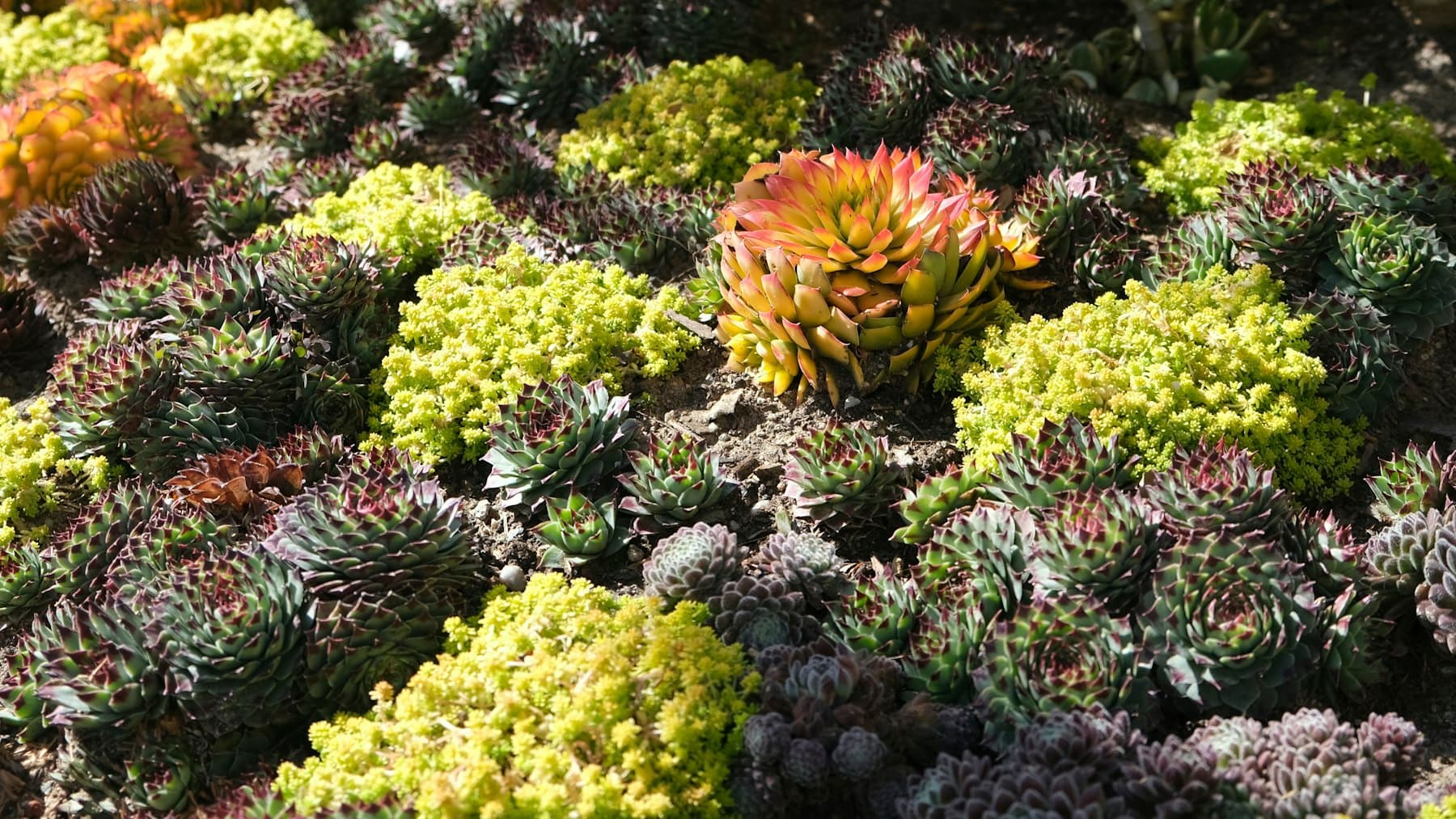
Succulents store water in their leaves and are the lowest-water plants you can grow, especially near the coast.
- Foxtail agave (Agave attenuata): Soft, spineless rosettes; protect from frost inland.
- Blue Elf aloe (Aloe 'Blue Elf'): Compact clumps with orange winter flowers.
- Blue chalksticks (Curio talinoides ssp. mandraliscae): A bright blue groundcover for mass planting.
- Aeonium: Pinwheel rosettes, including dark 'Zwartkop'; best with coastal mildness.
- Echeveria: Small, colorful rosettes for borders and containers.
- Dudleya: San Diego's native succulents, ideal for slopes and rock gardens.
Drought-tolerant grasses and groundcovers
Grasses add movement; groundcovers replace lawn in areas you do not walk on much.
- Lomandra 'Breeze': A soft, green, grass-like plant that stays tidy and tolerates heat and drought.
- Blue fescue (Festuca glauca): Small blue tufts for edging.
- Deer grass (Muhlenbergia rigens): A large native bunchgrass with a clean, fountain form.
- Myoporum parvifolium: A fast, low groundcover with white flowers.
- Dymondia margaretae: A silver, flat groundcover that handles light foot traffic between pavers.
- Kurapia: A low, flowering lawn substitute that tolerates foot traffic.
That brings the list to 30, enough to build a complete, layered garden in almost any San Diego microclimate.
Which "drought-tolerant" plants should you avoid?
Skip Mexican feather grass and purple or green fountain grass. They are sold as water-wise, but both are invasive in California and spread into wild lands and canyons. The California Invasive Plant Council rates Mexican feather grass (Stipa tenuissima) and fountain grass (Pennisetum setaceum) as problem species, and PlantRight lists safer alternatives.
Ice plant (Carpobrotus) is another to avoid on slopes; it is heavy when wet, shallow-rooted, and invasive in coastal habitats. Deer grass, lomandra, and blue fescue give a similar look without the spread.
How should you water a drought-tolerant garden?
Water deeply and infrequently, on drip, with plants grouped by need. A drought-tolerant plant still needs regular water for its first summer while roots grow. After that, most need a deep soak every two to four weeks in summer and little or nothing in winter.
Three rules make the difference:
- Hydrozone. Put succulents on one valve, Mediterranean shrubs on another, and any lawn or thirsty plants on their own. One schedule never fits all.
- Use drip. Drip emitters put water at the roots with little evaporation; spray heads waste water on hardscape and leaves.
- Use a smart controller. Weather-based controllers adjust watering automatically when it rains or heats up.
Overwatering is the most common way a drought-tolerant garden fails - succulents and Mediterranean shrubs rot in soil that stays wet in warm weather.
How do drought-tolerant plants fit a modern landscape?
Repeat a limited palette, contrast forms, and frame plants with hardscape. A drift of lomandra against a row of agaves, set off by large-format pavers and decomposed granite, looks deliberate and high-end. Our guides to xeriscape design and California native plants for San Diego go deeper on layout and native alternatives.
Replacing a lawn with water-wise plants can also qualify for rebates; see our guide to the San Diego turf rebate before you remove any grass, because most programs require approval first.
Get a water-wise plan for your yard
The right drought-tolerant garden depends on your sun, soil, and distance from the coast. Modern Yardz designs low-water landscapes with zoned drip irrigation, shown in a 3D rendering with a line-item cost before work begins. Call 619-775-9554 or explore our landscape design services.
Start Your Free Design Consultation
Tell us about your project and we'll be in touch within 24 hours. No pressure, no obligation.
Common questions
- What is the most drought-tolerant plant for San Diego?
- Succulents such as aloes, agaves, and native dudleya use the least water, followed by Mediterranean shrubs like rosemary and westringia. Once established, many need water only occasionally during summer.
- Do drought-tolerant plants need watering?
- Yes, regularly during their first summer while roots establish. After that, most need only a deep soak every two to four weeks in summer and little in winter. Overwatering is a more common problem than underwatering.
- Is Mexican feather grass invasive in California?
- Yes. The California Invasive Plant Council lists Mexican feather grass as a problem species that spreads into wild lands. Lomandra, blue fescue, and native deer grass are safer alternatives.
- What are good drought-tolerant plants for a San Diego front yard?
- Lomandra, westringia, kangaroo paw, aloes, agaves, and blue chalksticks combine well for a clean, modern front yard. Pair them with decomposed granite, pavers, or a small turf area for a finished look.
- Can drought-tolerant plants grow near the beach?
- Yes. Westringia, aeoniums, aloes, dudleya, and blue chalksticks handle salt air and wind well. Some inland plants like palo verde prefer heat and may sulk in cool coastal fog.
Ready to design your dream yard?
Tell us about your project. We'll send back a real plan, not a templated quote.
Book My Free Consultation→